

Strongyloidiasis-the name only makes a person dizzy but don’t worry, it’s a preventable and treatable parasitic infection especially when understood early. It is typically found in tropical and sub-tropical regions, sometimes it is also found in temperate regions.
Let’s break it down in simple terms!
What is Strongyloidiasis?
Strongyloidiasis is an infection caused by the tiny parasitic roundworm called Strongyloides stercoralis. The parasite lives in the soil and can get in through the skin, especially the feet. The auto infective capacity additionally portends risk of a hyper infection and fatal dissemination syndrome as the worm, possibly coated by enteric flora, can migrate to sites distant from the bowel, a process during which enteric bacteria are tracked throughout the body. It can mimic Inflammatory Bowel Disease.

How Do People Get Infected?
The infection usually begins when:
- A person walks barefoot on contaminated soil
- The parasite penetrates the skin
- It travels through the bloodstream to the lungs
- Then moves to the intestines, where it grows and multiplies
Common Risk Factors are:
- Poor sanitation and open defecation
- Walking barefoot outdoors
- Geographic Location: Strongyloidiasis is most common in tropical and subtropical regions, including parts of South America, Africa, and Southeast Asia.
- Age: While anyone can be infected, children and older adults may be more vulnerable due to their developing or weakened immune systems.
- Underlying Health Conditions: Individuals with compromised immune systems, such as those with HIV/AIDS, diabetes, or those undergoing chemotherapy, are at a higher risk for severe diseases.
- Travel History: People who have traveled to endemic areas are at increased risk, especially if they have engaged in activities that expose them to contaminated soil.
Signs and Symptoms
Strongyloidiasis is a type of infection that is typically symptom-free, especially in individuals with a healthy immune system. It’s often noticeable only through an unexplained increase in a certain type of white blood cell known as eosinophils. However, some people with the infection may display general symptoms.
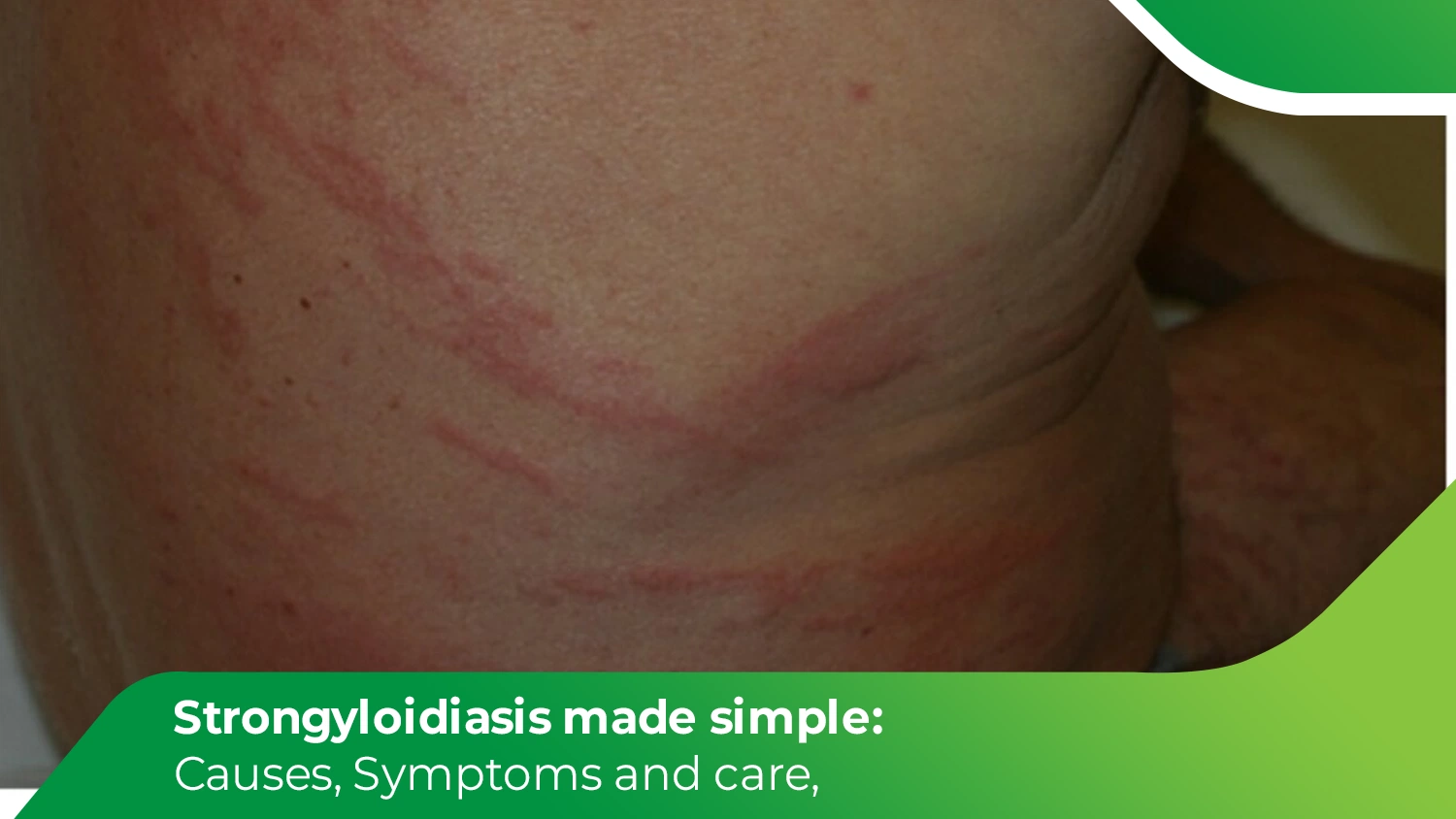
The signs of the acute phase of the infection can include a skin rash that is itchy and serpent-like in appearance, usually where the larvae of the parasite entered through the skin. This could be anywhere on the body but is often found on feet or hands. The skin reaction is known as ground itch and is characterized by itching, swelling, and redness at the site of the infection. The itchiness can last up to three weeks. The larvae of the parasite can pass through the lungs, causing a dry cough, difficulty in breathing, wheezing, increased eosinophils, and changeable lung conditions. This can result in bleeding in the lungs and cough, while the build-up of the eosinophils in the small air spaces often leads to a type of lung inflammation known as pneumonitis. Other symptoms can include diarrhoea, vomiting, and upper abdominal pain.
A severe complication known as Hyper Infection Syndrome can occur, exhibiting signs such as fever, blood infection, and signs of damage to the end organs which may include coughing up blood, gastrointestinal bleeding, obstruction in the intestines, and low sodium levels. The Strongyloides stercoralis parasite can cause chronic infections that can persist for years and may present as cough, abnormal breath sounds, difficulty in breathing, abdominal pain, lack of appetite, diarrhoea, and/or constipation. The symptoms linked with the respiratory and digestive systems are usually mild, and skin conditions such as hives or larva currents can still be seen.
How Is Strongyloidiasis Diagnosed?
Clinical Evaluation
Any diagnosis begins with a proper clinical evaluation, including a detailed medical history of the patient and physical examination. Healthcare professionals should keep a record of the patient’s travel history, soil exposure and any other underlying medical condition.
Diagnostic Tests include:
- Serological Tests: Blood tests can detect antibodies against Strongyloides stercoralis and also increase WBC level which help in easy detection of the infection.
- Laboratory Tests: The stool testing for larvae is the most common diagnostic test. However, because larvae are shed at different times, you may need to take more than one stool sample.
- In cases of severe disease, imaging studies such as X-rays or CT scans may be used to assess complications like pneumonia or bowel obstruction.
- Specialized Procedures: In some cases, a duodenal aspirate or colonoscopy may be done to obtain samples directly from the intestines.
Differential Diagnosis
Several conditions can impersonate the symptoms of strongyloidiasis, including:
- Gastroenteritis: Caused by various pathogens, leading to similar gastrointestinal symptoms.
- Irritable Bowel Syndrome (IBS)
- Other Parasitic Infections may require different treatment approaches.
Treatment Options
Medical Treatments
The first line of treatment for strongyloidiasis is the antiparasitic medication Covimectin 12 mg . This drug is effective in eliminating the parasite and is typically well-tolerated. In some cases, especially in severe infections, additional medications such as albendazole may be used.
Non-Pharmacological Treatments
While medication is essential, certain lifestyle modifications can support recovery:
- A balanced diet rich in nutrients makes your immune system stronger.
- Avoid touching dirty soil and wash your hands often to save yourself from getting sick again.
- Alternative Therapies: Some individuals may opt for herbal remedies or supplements, but these should be discussed with a healthcare provider.
Special Considerations
- Pediatric Patients: Treatment in kids should be closely examined, and the amount of dose should be altered based on weight of the patient.
- Geriatric Patients: Since older patients have the possibility of more than one disease at a time which means that there will be other medications involved so in such cases close monitoring should be followed.
Final Thoughts
Strongyloidiasis may seem scary, but if you understand it, you can prevent it and treat it. The hardest part is that it can stay quiet for years, and people with weak immune systems typically don’t detect it until problems start to happen. If you know about the disease early, get a diagnosis quickly, and get the right treatment with antiparasitic drugs like Ivermectin, the results can be very different. Wearing shoes, keeping good hygiene, and being careful in regions where diseases are common are all important steps that can lower the risk. For healthcare practitioners, it is very important to have a high level of suspicion, especially in patients with unexplained gastrointestinal, respiratory, or skin problems. Strongyloidiasis doesn’t have to be a lifetime problem if you get the correct care and pay attention.
FAQs
1. Is strongyloidiasis contagious from person to person?
No, strongyloidiasis does not transfer directly from one person to another.
2. What are larva currens?
Larva currens is a fast-moving, itchy, red rash caused by migrating Strongyloides larvae under the skin.
3. Can strongyloidiasis come back after treatment?
If the person comes in contact with the contaminated soil again there is a possibility of reinfection.
4. Are children safe to receive treatment?
Yes, children may be treated safely, but the dosage must be carefully altered according to the weight of the patient and monitored by a healthcare professional.
Leave a Comment