
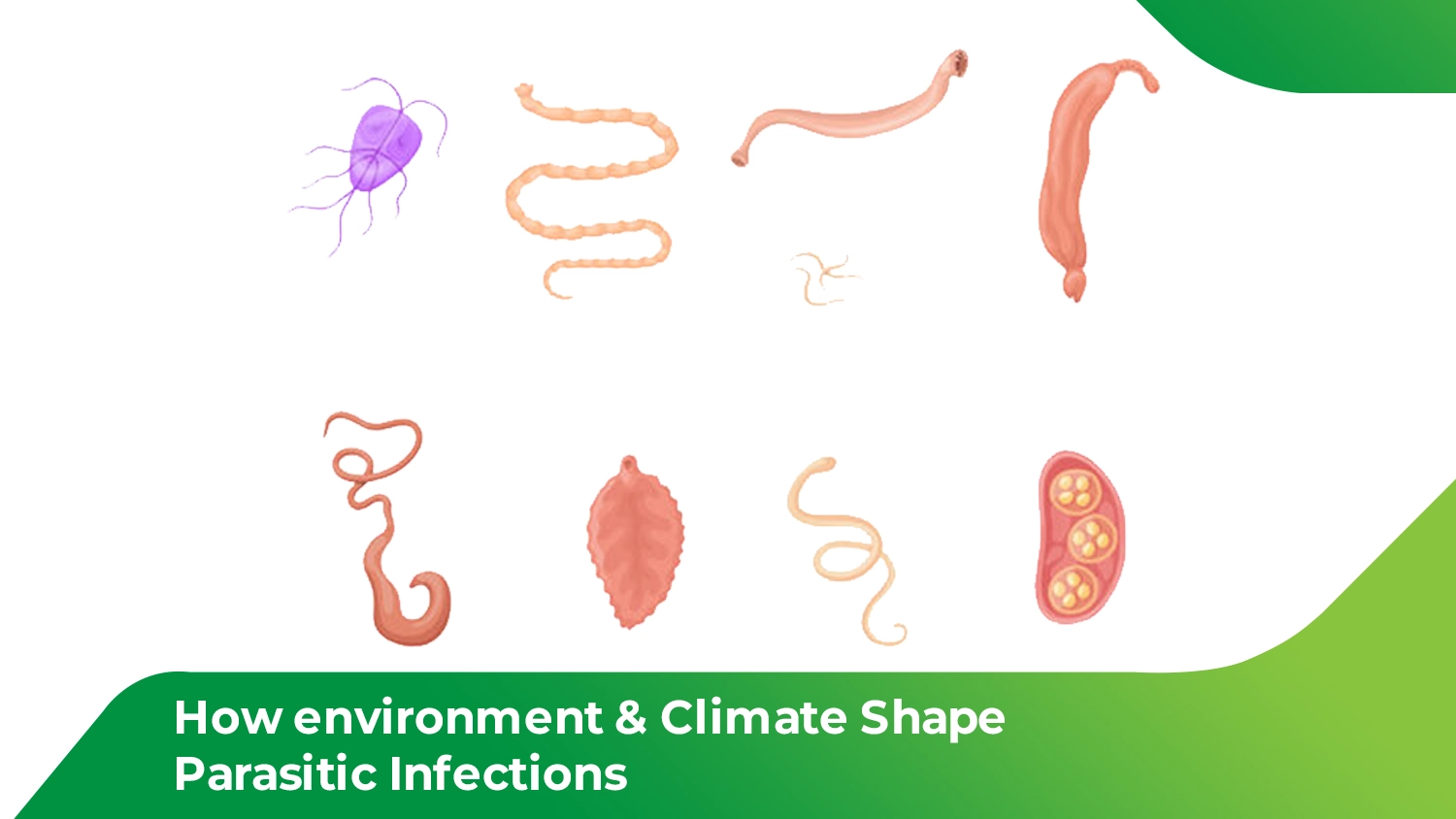

Are you safe within the environment or are you living in a disease environment? The morning rain feels harmless as it falls in the soil but as the rivers grow, insects emerge and life goes on in the same way. What we often ignore is that- the same rain has invoked a parasitic chain. Long before the symptoms appear, the environment has decided who will fall ill. The rising parasitic infections are often associated with rising temperatures, rainfall patterns, global warming and the changing environment.
Climate is an average pattern of variation in temperature, humidity, atmospheric pressure, winds, precipitation in a region for a longer period of time. Human interventions and natural phenomena can lead to climate change and environmental disturbances.

Climatic Conditions affecting Transmission of Parasitic Infection
- Deforestation- Deforestation is an important condition that affects vectors and their parasites. When the forest is cleared, it is converted into crop farming, grazing land, settlement of migrant populations or left as open plots which creates a favorable ecological niche for new vectors/existing vectors and their parasites survival and disease transmission.
- Water Bodies- Forest soil is acidic in nature and cleared lands with alkaline pH are prone to formation of puddles with water, which is a favorable environment for survival of infectious larva. Conversion from acidic to alkaline pH due to reduction of water salinity favors the growth of vectors such as snails and transmission of diseases by their parasites.
- Urbanization- People are migrating from rural to densely populated urban areas, which increases the vector and host interaction and transmission of parasitic infections. Indigenous populations have developed immunity to parasites. However, new settlers have not developed immunity resulting in increased vulnerability to vectors and transmission of diseases which can be treated by drugs such as Iverheal 3 mg. Water control projects, construction of irrigation canals, dams and reservoirs can lead to change in ecological niches of vectors such as mosquitoes, snails and their parasites.
- Globalization- Development of new roads provides acceleration of tourism, construction of irrigation canals, dams and new settlements all can lead to environmental disturbances. Due to such construction non- immune populations are exposed to indigenous vectors and new settlements lead to introduction of new vectors to those areas.
- Components of climatic system- Interaction among different climatic components such as temperature, humidity, rainfall, precipitation can lead to change in climate and ecological imbalance.
- Temperature and rainfall- Rising global warming causes alteration in the hydrological cycle leading to more droughts and floods resulting in poor hygiene, fresh water depletion and contamination leading to adverse health consequences. Heavy rainfall leads to collection of water in water bodies providing breeding sites for mosquitoes. Rain provides a favorable environment to vectors, which prolongs their life. Transmission of many parasitic diseases found during the rainy season. However, climate change and associated impacts will vary from region to region around the world.
From Environment to Infection
Climate Change Environmental Disruption
Vector Expansion
Human Exposure
Increased Infection
Environmental changes affecting parasitic disease transmission
Environmental changes particularly climate change and land-use alterations significantly alter parasitic disease transmission by affecting the life-cycle of the parasite, host susceptibility and human behavior leading to different parasitic infections. These factors create new habitats, disrupt ecosystems, weaken the immune system, etc. which influences the survival, reproduction and spread of parasites. The importance of seasonal and other environmental conditions in the transmission of parasitic infections like malaria, onchocerciasis, filariasis, etc. has been long recognized, but the mechanisms by which environmental factors alter the disease condition and their interaction with public health intervention are seldom well characterized. Understanding this mechanism is important to develop new strategies to supplement drug treatment such as Iverheal 3 mg for the affected population. In addition, an understanding of these mechanisms can be used to better estimate the long-term impact of impending climate change on environmentally mediated diseases at regional and global scales.
Vulnerable Populations: Who Is Most at Risk?
Climate change affects all the populations but it is majorly felt by the most vulnerable groups, particularly the low, middle-income and developing countries. Areas that have restricted access to healthcare, filtered water and proper sanitation are at major risk for parasitic infections. In regions such as Sub-Saharan Africa and parts of Southeast Asia, poverty, poor infrastructure, and rapid urbanization exacerbate the spread of parasitic diseases including skin diseases. Special populations, such as geriatric, pediatric and those with weakened immune systems, are majorly affected by the negative impacts of both climate change and parasitic infections. These groups face not only a higher risk of disease but also significant economic and social challenges. Therefore, it is essential for health systems to focus on protecting and supporting these at-risk communities.
Real-World Case Studies
1. Malaria in the Highlands
Increasing temperature has caused mosquitoes to survive in high-altitude regions for e.g. the regions of East Africa that were once malaria free are now experiencing increase in the cases of Malaria. Populations with low immunity are now experiencing outbreaks which highlights the fact that climate change expands the vector habitats.
2. Dams and Schistosomiasis
Dams and irrigation projects create slow-moving water that supports freshwater snails, the hosts of Schistosomiasis disease. Increased human water contact in these altered ecosystems sustains schistosomiasis transmission despite control efforts.
3. River Blindness and Rainfall Shift
Fast-flowing rivers support blackfly breeding which supports River Blindness transmission. Changes in rainfall and river flow alter vector habitats and increase the exposure to infected blackflies.
4. Urbanization and Lymphatic Filariasis
Heavy rainfall combined with poor urban drainage creates stagnant water that favours Culex mosquitoes. Overcrowded urban settlements experience higher transmission of lymphatic filariasis due to increased vector-host contact.
5. Flooding and Soil-Transmitted Helminths
Floods contaminate soil and water with human waste in areas lacking sanitation. This promotes the spread of soil-transmitted helminths, particularly among children who have frequent contact with contaminated environments.
FAQs
1. How does climate change increase parasitic infections?
Climate changes help the vector to grow and sustain for a longer period of time in the environment which eventually increases the parasitic infections.
2. Why do floods and heavy rainfall increase infection risk?
Flooding contaminates water and soil with parasites and creates stagnant water that serves as breeding sites for vectors.
3. Who is most vulnerable to climate-driven parasitic infections?
Geriatric, pediatric, people with weakened immune systems, and populations in developing countries that have very limited access to healthcare and sanitation are most at risk.
4. How can individuals reduce the risk of parasitic infections?
Using insect protection, ensuring safe water and sanitation, avoiding contact with contaminated water, and seeking early medical care can lower infection risk.
5. What are the treatments for parasitic infections?
Anti-parasitic drugs such as Ivermectin, Iverheal, etc can be used for the infections by consulting a professional healthcare.

Leave a Comment