
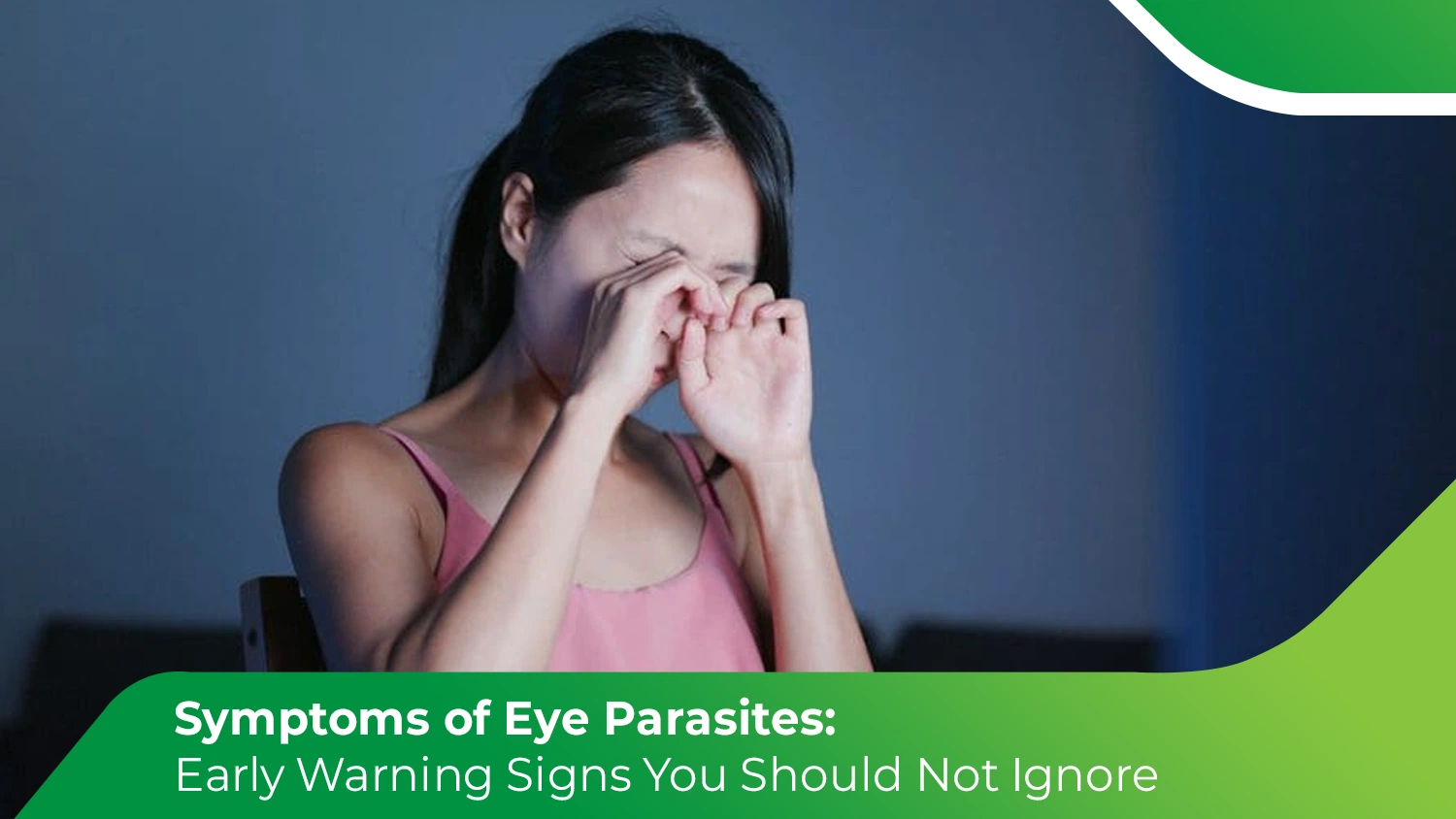

It often starts with small-watery eyes, redness, a mild itching that keeps troubling you or a sensation that feels like something is stuck in your eye. Most of us feel that this is something normal like an allergy or dust. However, in rare cases, these symptoms can point towards eye parasites affecting your eyes and leading to eye infections. Eye parasite symptoms are often neglected.
Understanding the early signs of eye infection, knowing how parasites in the eye behave, and recognizing when to seek medical care can help prevent complications and protect long-term vision.
What are Eye parasites?
I have a question for you all…. What are eye parasites?
Eye parasites are organisms that can infect the eye and the surrounding areas of the eye. Eye parasites in humans usually enter the body through contaminated water, poor hygiene, insect bites, contact with infected animals and many other reasons. A parasitic eye infection doesn’t always mean that it is due to poor hygiene, sometimes it occurs without any solid reason. It can be caused due to accidental exposure.
Types of Eye Parasites that affect human
There are different types of parasites that affect the eyes. Some of the common eye parasites are:
- Acanthamoeba
Acanthamoeba is found in the soil, water and dust. It causes the infection called Acanthamoeba Keratitis. Poor contact lens hygiene can be one of the top reasons for this condition. If you are using tap water to clean contact lenses please stop doing it as it is one of the major reasons for infection. Acanthamoeba usually doesn’t cause infection but when it does it can cause vision loss. Individuals that follow poor contact lens hygiene are at higher risk for this infection which can be treated by Iversuvac 6 mg.
- Loa Loa
Loiasis is caused by a worm named Loa Loa. Loa loa eye parasite is a worm found in West and Central Africa which is transmitted to humans through the bite of infected deer flies. One of the most alarming eye worm symptoms is the sensation or appearance of a visible worm in the eye, usually moving across the white part of the eye. Iversuvac 6 mg is a medication option for the infection.
- Toxocara
Ocular toxocariasis occurs when parasites from dogs or cats accidentally infect humans. These parasites from dogs to humans can affect the eye, especially in children, leading to inflammation and visual problems. Iversuvac 6 mg can be used to treat the condition if prescribed by the physician.

Early Warning Signs and Symptoms of Eye Parasites
The early symptoms of eye parasites can be mild and nonspecific, which often delays diagnosis. Common signs of eye parasites include:
- Persistent redness
- Eye irritation that won’t go away
- Watery eyes
- Itching
- Inflammation of the eyelids
- Retinal scarring
- Foreign body sensation in the eye
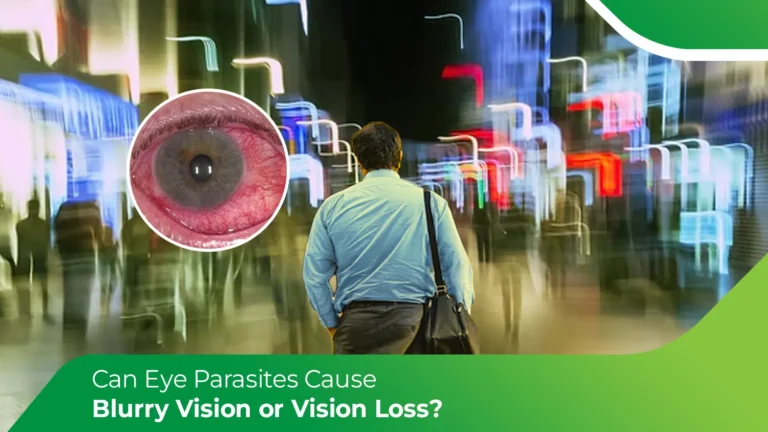
- Blurry vision
- Fever
These eye parasite symptoms may not always be visible and thus there is lack of treatment for such conditions.
Symptoms Often Mistaken for Common Eye Problems
These symptoms are something that are quite common during dry eye symptoms or allergic eye symptoms and thus are neglected by many individuals as they are mistaken for common eye problems. This is the reason many people confuse an eye infection vs parasite infection because the symptoms usually overlap. If after treatment the symptoms are still persistent, further evaluation should be practiced.
Advanced or Serious symptoms
If left untreated there can be advanced or serious symptoms observed like:
- Severe eye pain
- Eye inflammation
Key symptoms of vision loss are:
- Blurry vision
- Visual disturbances like seeing dots, flashes and lines
- Extreme sensitivity to light
- Distorted vision
Possible Complications if left untreated
Untreated infections may lead to eye parasite complications like:
- Corneal damage
- Chronic inflammation
- Retinal scarring
- Scarring of eye tissues
- Permanent vision loss
Early diagnosis helps to reduce such complications.
When Should You See an Eye Doctor?
Knowing when to see an eye doctor is very important because that affects all your future conditions. Seek immediate medical help if you experience any of the following:
- Sudden or severe eye pain
- Rapid vision changes
- Persistent redness or swelling
- Sensation of something moving in the eye
If you observe that your symptoms are constant and there is no change do consult a physician without any delay. These are the eye symptoms that required medical attention.
Causes and Risk Factors of Eye Parasites
Prevention is better than cure. Understanding the causes of eye parasites helps in reducing the exposure of the infection. Several risk factors for eye parasites have not been identified yet. Few of the causes are:
- Environmental and Hygiene-Related Causes
o Exposure to contaminated water
o Swimming or bathing in untreated water sources
o Poor hand hygiene
- Contact Lens–Related Risk Factors
o Not sterilizing contact lens
o Misuse of contact lens
o Rinsing lenses with tap water
o Sleeping with lens on
These factors increase the risk of contact lens infection.
- Travel and animal exposure
Eye parasites are quite common in tropical regions and since people travel a lot nowadays it is the reason for infection. Exposure to parasites from pets through soil or feces of the pets.
How Eye Parasites Are Diagnosed?
The diagnosis of eye parasites usually involves a detailed eye examination. Eye specialists may use a slit lamp exam, imaging tests, or laboratory analysis to identify the parasite and assess damage.
Early diagnosis improves treatment success and recovery outcomes.
Treatment Options for Eye Parasites
Treatment for eye parasites depends on the type of parasite and severity of infection. Options may include:
- Antiparasitic medications like Iversuvac 6 mg
- Anti-inflammatory or antibiotic eye drops
- Eye parasite removal in specific cases
Treatment such as Iversuvac 6 mg is often highly effective when started early.
Recovery and Prognosis
Eye parasite recovery varies by condition, but early treatment outcomes like Iversuvac 6 mg are generally positive. Most patients recover fully without lasting vision problems when treated promptly.
How to prevent Eye Infections?
Practical eye parasite prevention steps include:
- Practicing good hand and eye hygiene
- Avoiding contact with untreated water
- Following proper contact lens care routines
- Regular deworming of pets
- Protecting eyes from insects in high-risk areas
- Use insect protectants
These steps also help in preventing eye infections overall.
Conclusion
The symptoms of eye parasites may begin subtly but should never be ignored. Early detection of eye parasites plays a vital role in preventing complications and protecting vision. Staying informed, practicing good hygiene, and prioritizing regular eye health care are the best defenses against serious eye infections.
FAQs
- Can parasites be transmitted through raw meat?
Yes. Parasites can be transmitted through raw, uncooked meat or food.
- What are the diagnostic techniques for eye parasite infections?
Diagnostic techniques like slit-lamp examination, microbial testing, PCR test, etc are used to detect eye infections.
- Can eye parasites affect only one eye?
Yes. Many parasitic eye infections begin in one eye, which often leads people to dismiss symptoms as minor irritation or dryness.
Medical Disclaimer
This content is not a substitute for medical advice. Always consult a qualified healthcare professional for diagnosis and treatment of eye-related symptoms.
Leave a Comment