
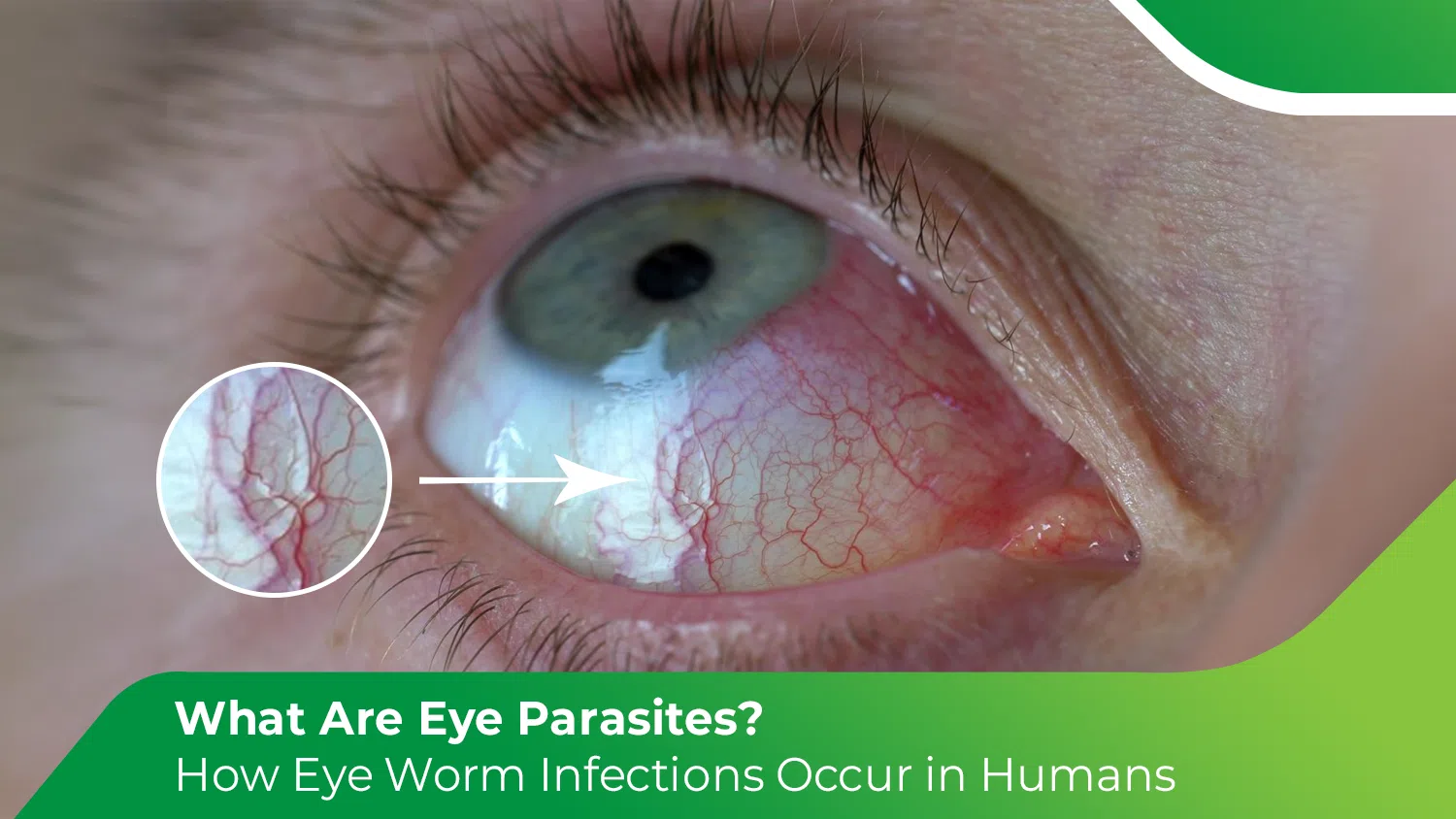

Imagine your eye is a home to a small living parasite. That itching and irritation in your eye is not because of dust or an allergy-it is a parasite….a literal parasite living in your eye. As unbelievable as it may be but it is true, Eye parasites are real and there are so many cases reported that have caused trouble in the eye due to parasites. Eye parasites can be treated by antiparasitic medications like Ivermectin (Iverhuman 12 mg).
What are Eye Parasites?
Eye parasites are small micro-organisms that live on the host and here the host is eye. They do not show symptoms usually which makes it difficult to recognize the issue. They are considered to be the rarest kind of parasitic infection that are treated by antiparasitic infections like Iverhuman 12 mg. They can affect the eye or the surrounding tissues and cause issues such as irritation, discomfort and in are cases vision loss. These infections often occur in humans that live in poor sanitation areas, high insect exposure, close contact with animals and less exposure to medical education.

What are the symptoms of Eye Infections?
Eye infections are usually hidden beneath and do not show symptoms. Few of the symptoms that can be observed are:
- Redness in the eye
- Irritation
- Eye pain
- Excessive tear production
- Retinal scarring
- Sensitivity to light
- Loss of vision (rare)
- Pain in the eye or surrounding area
- Inflammation in the eye
- Blurry vision
- Fever
- Loss of appetite
- Excessive itching
What type of Parasite Infections affect the eye?
The common type of Parasitic infection seen in the human are:
- Loiasis
Loiasis is caused by a worm named Loa Loa. Loa loa is a worm found in West and Central Africa which is transmitted to humans through the bite of infected deer flies. The worm is sometimes seen moving from the white part of the eye. Once the worm is inside the body, the parasite grows to develop and can migrate to various tissues. But the adult worm and larvae can cause eye infection. If left untreated it can lead to inflammation and other complications but not dangerous.
Medications such as Iverhuman 12 mg can be beneficial to treat the infection.
- Toxoplasmosis
Toxoplasmosis is a parasitic infection that is caused by a protozoa Toxocara. These parasites are usually found in cats and dogs. Mostly found in the animal waste especially of the domestic cat. Humans can be infected due to contaminated soil, food and dirty hands. The condition that is caused due to this parasite is called Ocular Toxoplasmosis. Individuals with weak immune systems and the newborns are more likely to get affected by Ocular Toxoplasmosis. If left untreated it can lead to ocular scarring or vision loss. Iverhuman 12 mg can be used to treat the condition if prescribed by the physician.
- Acanthamoebiasis
Acanthamoebiasis is caused by the parasite Acanthamoeba which is found in the water, soil and dust. Poor contact lens hygiene can be one of the top reasons for this condition. If you are using tap water to clean contact lenses please stop doing it as it is one of the major reasons for infection. Acanthamoeba usually doesn’t cause infection but when it does it can cause vision loss.
- Gnathostomiasis
Gnathostomiasis is caused by a parasite found in the parts of Asia particularly Southeast Asia, Thailand and Japan. The parasite can be transmitted through raw, undercooked meat or food. If left untreated it can lead to partial or full vision loss. It can be treated by medicines like Iverhuman 12 mg under medical supervision.
- River Blindness
Onchocerciasis also known as river blindness is a neglected tropical disease that is caused by the nematode Onchocerca volvulus. It is one of the second leading causes of blindness due to infection in the world. It is mostly found in the tropical regions of the world especially in sub Saharan Africa. Iverhuman 12 mg can be a potential treatment option for the infection.
Diagnosis
Diagnosis of eye parasitic infections can be done by following techniques:
- Slit-lamp examination
Eye’s structure is examined using a slit-lamp examination technique
- Microbial testing
A sample of discharge or tissue is taken by a sterile swab for lab analysis to detect the type of infection that has infected the individual
- Polymerase Chain Reaction (PCR) Test
PCR Tests are advanced molecular diagnostic tests that are done to detect viral, parasitic, bacterial infections. It is fast, sensitive and specific.
- Amsler Grid Test
It is a simple test that can be done at home to test the vision. This test is used to assess the macula, the center of the retina, responsible for detailed central vision.
Prevention Tips
Not all infections can be prevented but there are several steps that could be followed to at least save ourselves from infection after all Precaution is better than cure.
Some of the tips are:
- Do not consume raw meat
- Cook meat thoroughly before use
- Drink clean, treated water
- Wash your hands regularly
- Avoid touching your eyes regularly
- Wear protective clothing
- Use insect repellants
- Do not clean contact lens with tap water
- Deworm your pets
- While travelling try to carry your own water
- Use sterile solutions to store your contact lens
Conclusion
Eye parasites and eye worm infections are uncommon but potentially serious conditions that should not be ignored. Understanding how these infections occur helps in recognizing symptoms early and seeking timely medical care. With proper hygiene, preventive measures, and prompt treatment, the risk of complications can be greatly reduced. Protecting eye health is essential, as early action can prevent long-term damage and preserve vision.
Leave a Comment