
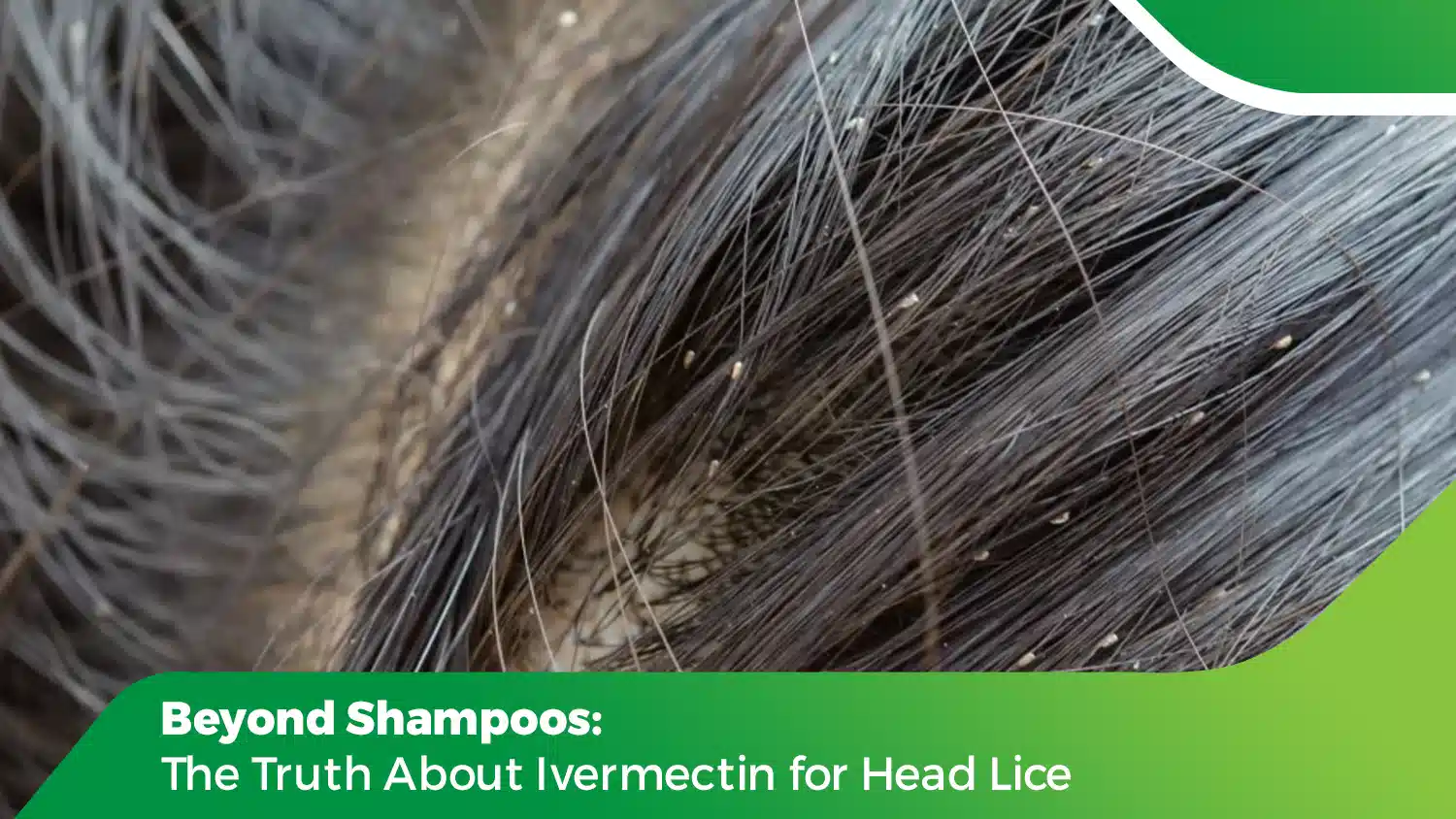

The text that follows might be a bit uncomfortable. If you’ve ever had that sudden, sharp itch at the base of your neck-the kind that makes your heart sink because you know the school just sent out “the letter”-then you know exactly the kind of visceral panic I’m talking about. Head lice. It’s a taboo, a nuisance, and for many parents or even adults living in shared spaces, it feels like a personal failure, even though it’s just biology being annoying.
I remember my own run-in with the “super lice” phenomenon a few years back. We did the vinegar, the sticky mayonnaise masks, and the expensive drugstore shampoos that smelled like a chemical plant. Nothing worked. It felt like these tiny hitchhikers had evolved body armor. That’s when the conversation in the medical world shifted. We moved away from the scalp and started looking at what happens when you treat the problem from the inside out.
The Evolution of the Itch
For decades, we’ve relied on topical neurotoxins-shampoos that paralyze lice. But evolution is a relentless architect. Lice have developed “knockdown resistance” to common over-the-counter treatments. They essentially laugh at the stuff we used in the nineties. This is where oral interventions started gaining ground, specifically with a medication that has been a workhorse in global health for a long time.
When the usual lotions fail, doctors often turn to a specific dosage. Using Iverhuman 12 mg has become a sort of “final boss” move for stubborn infestations. It’s a shift in strategy. Instead of trying to coat the hair in poison, you’re making the host (that’s you) less hospitable. When a louse bites, it gets a dose of something it can’t survive.
It sounds intense, doesn’t it? Taking a pill for a bug on your hair. But when you’ve spent six hours combing nits out of a crying toddler’s hair, “intense” starts to look like “efficient.”
Why the Pill Over the Paste?
There is a certain messy reality to topical treatments. You have to get every single strand. You have to leave it on for exactly the right amount of time. You have to repeat it in seven days because most shampoos don’t kill the eggs (nits). It’s a logistical nightmare.
The logic behind Iverhuman 12 mg is simpler. It circulates in the bloodstream. It doesn’t care if you missed a spot behind the left ear or if your hair is too thick for the comb. It levels the playing field. However, it’s not a “one and done” miracle in the way people hope. Lice life cycles are tricky. You usually still need that second dose a week later to catch the newly hatched ones before they can lay their own eggs.
I was talking to a pediatric nurse in London recently who mentioned that the psychological toll of lice is often worse than the physical. The “shame” of it keeps people from seeking the right help. They keep buying the same ineffective shampoos, wasting money, while the bugs just get more resistant. Stepping up to Iverhuman 12 mg is often the moment a family finally gets their sanity back.
Safety, Myths, and the Internet Rabbit Hole
Now, we have to address the elephant in the room. The name “Ivermectin” became a political football over the last few years for reasons that had nothing to do with parasites. It’s unfortunate, because it’s a Nobel-winning drug that has saved millions of lives from river blindness and lymphatic filariasis.
When used for head lice, the safety profile is well-documented, but-and this is a big “but”-it’s not for everyone. You aren’t going to give Iverhuman 12 mg to a tiny infant or someone with specific liver conditions. It’s a prescription-strength tool, not a candy.
I’ve seen people on forums trying to “math” their way into using veterinary versions. Please, just don’t. The fillers and concentrations in animal meds aren’t meant for human digestion. If you’re at the point where you need Iverhuman 12 mg, go through a GP. A real human doctor who can check your weight and your history.
The Biological “Oops”
One of the things I find fascinating-in a sort of gross, journalistic way-is how lice actually die from oral meds. It’s not an instant “pop.” It’s a gradual paralysis. They stop being able to feed, and they stop being able to move.
But here’s the kicker: the eggs are still there. Even if you take Iverhuman 12 mg, you still have to deal with the physical debris. The medication doesn’t make the nits disappear like magic; it just ensures that once they hatch and try to take their first meal, it’s their last. There’s something darkly poetic about that, isn’t there?
A Relatable Struggle
I think about a friend of mine, a high-powered attorney who was absolutely humbled by her daughter’s preschool lice outbreak. She was doing Zoom calls with a shower cap on, filled with olive oil, looking like a tragic salad. She was terrified of the “stigma.”
When she finally got a prescription for Iverhuman 12 mg, she told me it felt like the weight of the world had lifted. The scratching stopped within forty-eight hours. Sometimes, we try so hard to be “natural” or “traditional” that we forget that modern medicine exists to solve exactly these kinds of persistent, soul-sucking problems.
The Bigger Picture: Public Health
In the UK and the US, we tend to view lice as an individual problem. But it’s a community one. If one kid in the class has “super lice” that are resistant to permethrin, and they keep using the same weak shampoo, the whole class stays at risk.
This is why doctors are increasingly comfortable prescribing Iverhuman 12 mg early in the process rather than waiting for the tenth failed topical treatment. It breaks the cycle of transmission faster. It’s a public health win disguised as a personal relief.
Is it a bit weird to think about a drug in your blood killing a bug on your head? Sure. But compared to the toxic fumes of some of those old-school pesticides we used to douse ourselves in? I’ll take the pill every time.
Final Thoughts from the Field
We’re living in an era where the old rules of “hygiene” don’t really apply to lice. They don’t care if you’re rich, poor, clean, or messy. They just want a warm scalp.
If you find yourself in the trenches, fighting a battle that feels unwinnable with drugstore products, talk to your doctor about the oral route. Asking for Iverhuman 12 mg isn’t an admission of defeat; it’s an admission that you’re smarter than a prehistoric parasite.
I’m off to go check my own kids’ heads now-just writing this has made me psychologically itchy. We’re all in this weird, itchy boat together.
Do you feel like your current treatment is just spinning its wheels? Or maybe you’re worried about the side effects of switching from topical to oral? I can help you look at the latest clinical guidelines if you’re trying to make an informed choice.
FAQs
1. Wait, so do I still have to comb my hair if I take the pill?
In a word: yes. While Iverhuman 12 mg is a powerhouse at stopping the living lice, those little glue-like eggs (nits) aren’t going anywhere on their own. You still want to get them out, if only for the sake of your own vanity and to make sure you can see if any new activity starts up. It’s a team effort between the medicine and the comb.
2. How long does it stay in my system?
It has a relatively short half-life, which is why that second dose is so critical. Most people find that the Iverhuman 12 mg does its heavy lifting within the first twenty-four hours, but the “safety net” second dose a week later is what truly ensures the infestation is dead and buried.
3. Are there side effects I should actually worry about?
Most people handle it just fine-maybe a bit of dizziness or a mild stomach upset. It’s not like chemo; it’s a very targeted strike. But again, this is why you don’t DIY this. You want a professional to tell you if your specific body is a good fit for Iverhuman 12 mg.
4. Is this the same stuff they use for “Super Lice”?
Exactly. “Super Lice” is just a catchy media term for lice that have evolved to survive standard shampoos. Since Iverhuman 12 mg works on a completely different biological pathway, the lice haven’t had the chance to build up a defense against it yet. It’s the “new” weapon in a very old war.
5. Can I get this over the counter in the UK or US?
No, and honestly, that’s a good thing. Because Iverhuman 12 mg is such a specific clinical tool, you want a pharmacist or doctor involved to ensure the dosage is right for your body weight. It keeps the drug effective for everyone in the long run.
Leave a Comment