
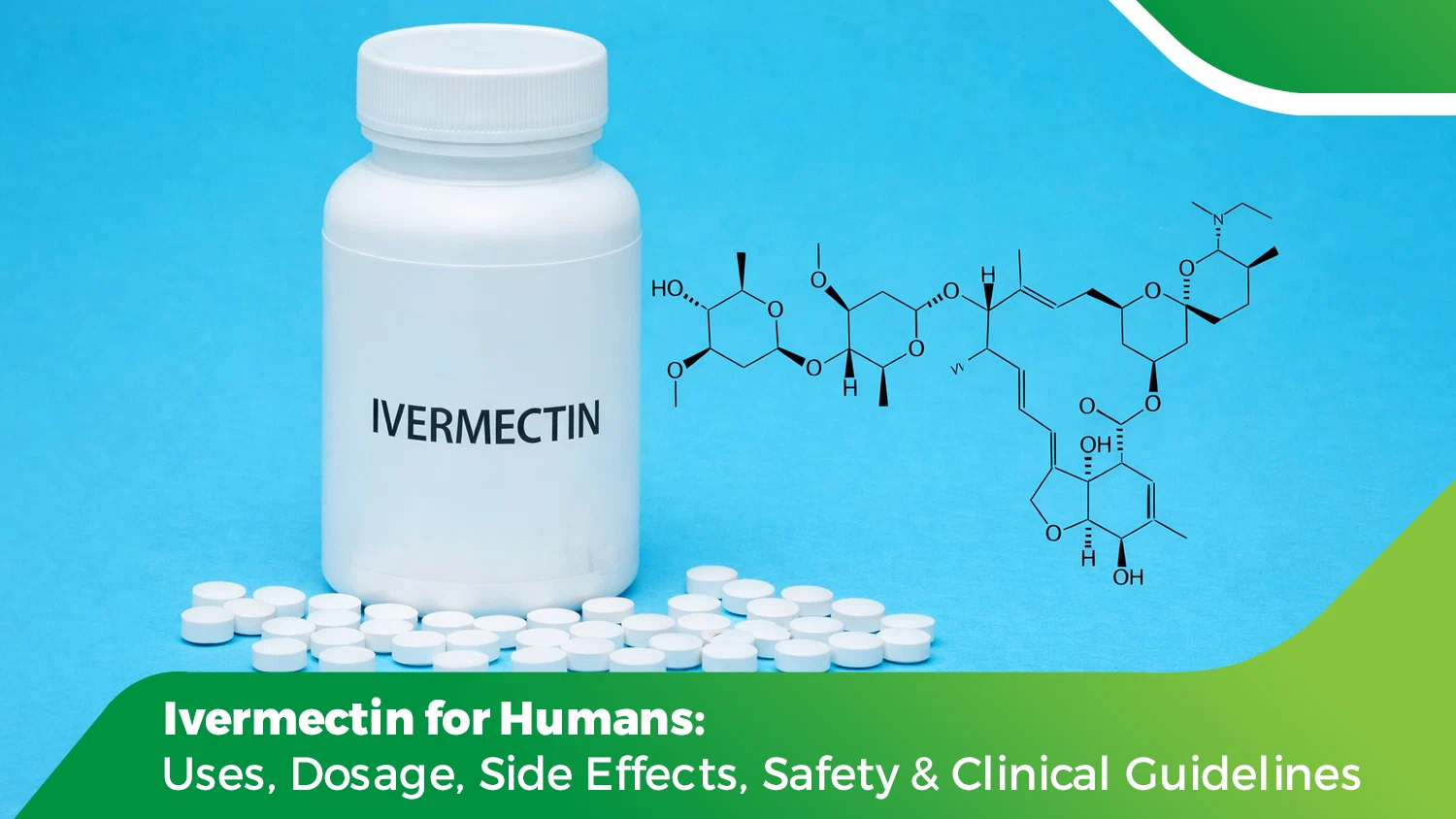

Ivermectin for humans is a widely used antiparasitic medication that has become essential in treating several parasitic infections worldwide.
Ever heard of the wonder drug for nematodes and arthropod parasites? Ivermectin has come up as a wonder drug for such parasitic infections. Ivermectin is an antiparasitic medicine. Over the years, it has become an essential medicine in global health programs due to its effectiveness and safety profile when used appropriately.
This article focuses on Ivermectin’s history, mechanism of action, approved uses, dosage guidelines, side effects, interactions, and safety considerations.
History of Ivermectin
Ivermectin was discovered in the mid-1970s and approved for use in 1987. It is a wonder drug that originated from soil bacteria in Japan. Here is the detailed timeline of the history of Ivermectin:
- Discovery: Microbiologist Satoshi Ōmura isolated a novel Streptomyces bacterium from soil near a Japanese Golf course. Satoshi Ōmura in collaboration with a scientist, William Campbell at Merck produced “avermectin” which was later modified into more potent version that is Ivermectin
- Veterinary use: In 1981, Ivermectin was first marketed for veterinary use.
- Human application: In 1987, Merck announced that it would donate a drug named Mectizan to treat the disease Onchocerciasis. Since then Ivermectin has been used to treat various parasitic infections such as Scabies, strongyloidiasis, onchocerciasis and lymphatic filariasis.
- Scientific recognition: In 2015, Satoshi Ōmura and William Campbell were awarded with a nobel prize
What is Ivermectin for humans?
Ivermectin is an antiparasitic medication that is used to treat parasitic infections. It is approved by the USFDA for the treatment of parasites. According to reports, In 2023 Ivermectin was the 295th commonly prescribed medication in the USA. It is available in a generic version. The brand name of the medication is Stromectol. Ivermectin for humans is commonly prescribed to treat parasitic infections such as scabies, strongyloidiasis, and river blindness.
Mechanism of action
Ivermectin acts by interfering with the nerve and muscle function of the helminths and insects. The drug binds selectively and with high affinity with the glutamate-gated chloride channels. This binding opens the channels and increases the flow of chloride ions leading to hyperpolarisation of the cell membranes. This causes paralysis and death of the parasite.
Medical Uses of Ivermectin
- Strongyloidaisis
Strongyloidiasis is an infection caused by the tiny parasitic roundworm called Strongyloides stercoralis. According to WHO, Ivermectin is a choice of drug for the treatment of Strongyloidiasis.
- River blindness
River blindness also known as Onchocerciasis is treated by Ivermectin and its medications like Iverhuman 12 mg, Covimectin 12 mg, Iverheal 3 mg, etc. Onchocerciasis is a neglected tropical disease that is caused by the nematode Onchocerca volvulus. It is the second leading cause of blindness worldwide.
- Scabies
Scabies is a parasitic infection caused by tiny mites that burrow into the skin and lay eggs which causes intense itching and rashes. Scabies is caused by a tiny mite called Sarcoptes scabiei. Ivermectin is the classic treatment for scabies.
- Head lice
Lice has existed for hundreds of years now. Ivermectin is a highly effective, FDA approved prescription medication for the treatment of head lice in individuals above 6 months and older. When topical treatments fail, that’s when Ivermectin comes into picture. It is often used in a two-dose regimen, with a second dose administered 7 to 10 days after the first to address newly hatched lice.
Benefits of Ivermectin for Humans
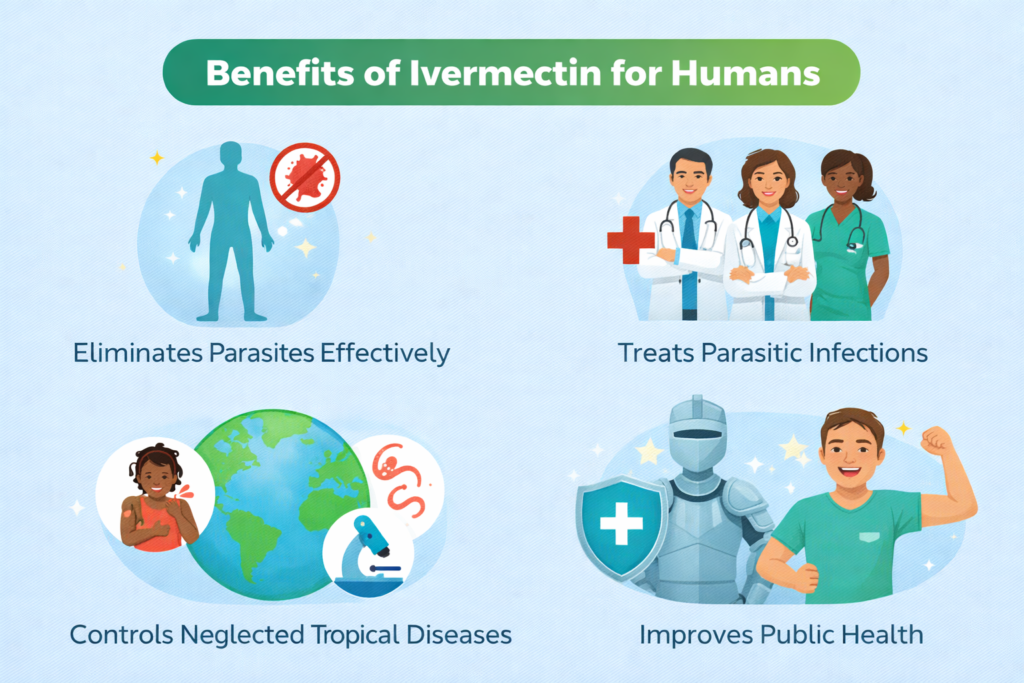
Ivermectin is a widely prescribed medication to treat parasitic infections. Key benefits of this medication includes:
- Treatment of Parasitic infections: Effective in treating parasitic infections such as Strongyloidiasis, Onchocerciasis, Head lice and Scabies
- Eliminates parasites effectively: Ivermectin works by paralyzing parasites, preventing them from surviving and reproducing in the body.
- Helps control neglected Tropical diseases:Ivermectin has been a crucial medication in global public health programs aimed at controlling neglected tropical diseases.
- Convenient Treatment: Ivermectin is a convenient single dose regimen used for the treatment of parasitic infections.
- Well studied safety profile: Ivermectin has been studied for over the years for its safety profile and it has found to be quite effective and safe for humans when taken as prescribed.
- Easy to use
Side-effects of Ivermectin
Some of the common side-effects seen when using Ivermectin are:
- Itchy skin
- Rashes
- Skin rashes
- Nausea
- Vomiting
- Diarrhea
- Light-headedness
- Constipation
- Fever
- Dry skin
Serious side-effects reported are:
- Increased heart rate
- Seizures
- Severe skin rashes
- Loss of bladder or bowel control
- Trouble in breathing
- Worsen asthma
- Vision loss
You can experience some other side-effects as well so if the side-effects remain for a longer period of time seek medical help immediately.
Ivermectin Formulations
There are two main types of formulations that ivermectin is sold under, the major one is oral formulation-Tablets like Covimectin 12 mg, Iverheal 3 mg, Iverguard 12 mg. The other type of formulation is Topical cream or lotion for the treatment of scabies or head lice.
Ivermectin dosages for human
- Usual Ivermectin dose for Onchocerciasis
Dose: 0.15 mg/kg orally once every 12 months
For the treatment of individual patients, retreatment may be considered at intervals as short as 3 months.
Dosage guidelines based on body weight:
15 to 25 kg: 3 mg orally once
26 to 44 kg: 6 mg orally once
45 to 64 kg: 9 mg orally once
65 to 84 kg: 12 mg orally once
85 kg or more: 0.15 mg/kg orally once
- Usual Adult Dose for Strongyloidiasis
Dose: 0.2 mg/kg orally once
In general, additional doses are not necessary. However, follow-up stool examinations should be performed to verify eradication of infection.
Dosage guidelines based on body weight:
15 to 24 kg: 3 mg orally once
25 to 35 kg: 6 mg orally once
36 to 50 kg: 9 mg orally once
51 to 65 kg: 12 mg orally once
66 to 79 kg: 15 mg orally once
80 kg or more: 0.2 mg/kg orally once
- Usual Adult Dose for Scabies
Dose: 0.2 mg/kg orally once, and usually repeated in 2 weeks
Note: The above dosage guidelines are for reference purposes please consult your healthcare provider for the correct dosage.
How should I use an Ivermectin tablet?
- Take Ivermectin tablets on an empty stomach, at least 1 hour before or 2 hours after a meal.
- Ivermectin is usually given as a single dose. Take this medicine with a full glass of water.
- To effectively treat your infection, you may need to take Ivermectin again several months to a year after your first dose.
- If you have a weak immune system , you may need to take more than one dose of Ivermectin. Some people who have a weak immune system need to take this medicine on a regular basis. Follow your physician’s instructions.
- To make sure this medicine is working, you may need to provide frequent stool samples.
- Never take Ivermectin in larger amounts, or for longer than recommended by your physician. Follow all directions on your prescription label.
- Store this medicine at room temperature away from moisture and heat.
Missed dose
In case you miss the first dose, take the dose immediately. However if it is almost time for your second dose skip the first dose and go back to your regular dosing schedule. Do not cross dose.
Overdose
An ivermectin overdose can occur if a person takes more than the prescribed, weight-based dose or uses high-concentration veterinary formulations meant for animals. Symptoms may range from nausea, dizziness, and vomiting to more serious neurological effects such as confusion, loss of coordination, blurred vision, seizures, or even coma in severe cases. Because high doses can affect the nervous system, suspected overdose requires immediate medical attention. Ivermectin should always be taken exactly as directed by a healthcare professional to ensure safety.
Seek immediate medical help in case of overdosing.
Interactions
Ivermectin can react with many other medications, which may alter its effectiveness or increase the risks of adverse effects.
Few of the major drug interactions are:
- CYP3A4 inhibitors: Ivermectin when combined with medications like ketoconazole, itraconazole, clarithromycin, erythromycin causes rapid metabolism of ivermectin which leads to high toxic levels of the medication in the body.
- Anticoagulants: Anticoagulants like Warfarin when combined with Ivermectin may increase the risk of bleeding.
- Anti-convulsants: Anti-convulsants like phenytoin, phenobarbital, and carbamazepine when taken with Ivermectin may reduce the effect of Ivermectin.
- HIV Protease Inhibitor: HIV Protease Inhibitor like Ritonavir should not be combined with Ivermectin
- Ivermectin when taken with orange juice can be less potent
Contraindications
- Do not use Ivermectin if you have any known sensitivity towards Ivermectin or any other ingredient of the tablet.
- Pregnancy- There is little to no data available on the use of Ivermectin in pregnant women. Consult your healthcare provider for more information.
- Breast-feeding: Ivermectin can pass into breast milk and may harm a nursing baby.Consult your healthcare provider.
- Avoid consumption of alcohol when using Ivermectin.
Clinical Guidelines & Responsible Use
- Use only for approved indications
- Follow weight-based dosing
- Avoid self-medication
- Do not use animal-grade Ivermectin
- Seek medical supervision
Conclusion
Ivermectin for humans is a scientifically validated antiparasitic medication that has transformed global health programs. When used correctly under medical supervision, it is safe and highly effective.
However, responsible use is essential. Accurate diagnosis, proper dosing, and medical oversight are critical to ensure both safety and effectiveness.
Never self-medicate or use veterinary formulations.
FAQs
- Does Ivermectin work against all the parasites?
No. Ivermectin does not work against all the parasites. Correct diagnosis is essential before starting the treatment.
- Why is veterinary Ivermectin dangerous for humans?
Veterinary formulations are often highly concentrated and intended for large animals. Using these products can result in accidental overdose and serious neurological complications.
- Do I need to refrigerate the tablets after opening?
No. Do not refrigerate the tablets. Store Ivermectin at room temperature, away from direct sunlight.
- Does Ivermectin cures cancer?
No. Ivermectin is not approved or recommended to be used for the treatment of cancer.
Leave a Comment