

A beautiful river flows in a small village of Africa which was once a place that was visited the most is now a silent riverbank. The river that was once the heart of the village has now increased the heartbeats of the people residing in the village.
Amina remembers the itching before she remembers anything else. It starts with irritation and itching in the limbs and arms which is quite difficult to be ignored. At first, she thought it might be any bug bite that she got by working near the river. But it doesn’t stop. The itching worsens. What started as a simple bug bite was turning into something different. At night, her vision started to blur. She couldn’t see the shapes. The figures were not sharp. Eventually the world around her began to dim.
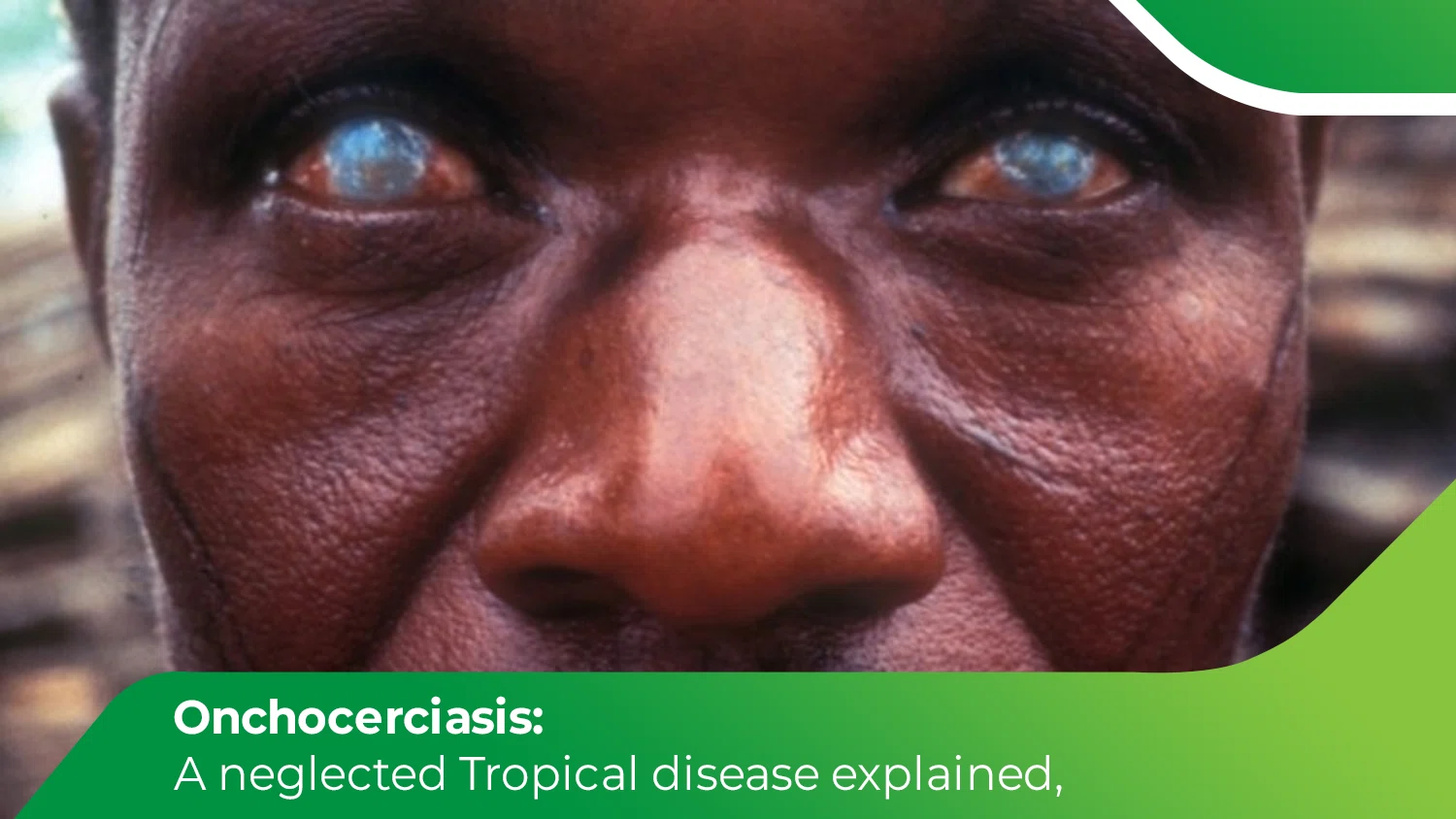
Amina was developing Onchocerciasis also known as river blindness.
Let’s have a look on “Onchocerciasis: River Blindness”
Onchocerciasis is a neglected tropical disease that is caused by the nematode Onchocerca volvulus. It is one of the second leading causes of blindness due to infection in the world. It is mostly found in the tropical regions of the world especially in sub Saharan Africa.
Lifecycle of the disease
The nematode breeds in the black fly found only in certain areas near the fast-flowing rivers and streams. The life cycle starts by a black fly biting an infected human host and ingesting the microfilariae from the skin or blood. These microfilariae move from the gut to the flight muscles of the fly, where after one week they turn into the infective insects from the initial larval phase. Then they migrate to the salivary glands of the fly and are ready to be transmitted again. The larvae then enter the new human host through the skin by the bite of a fly, over the next 6-12 months they develop into mature adult parasites. Most symptoms of river blindness occur when the body’s immune system reacts to these larvae. While the most common mode of transmission is direct via insect bites, the disease can also spread from an infected mother to the fetus through the placenta.
When does the body fight back?
The itching Amina felt was not normal.
It was her body telling her that something is wrong. It was her immune system reacting to the parasite bite.
The worm can live for up to 15 years in the human body. The immune system often tolerates the adult worms. The body begins to show the reactions when the millions of microfilariae they produce die. It triggers intense inflammation and causes severe itching, depigmentation, nodules and skin thickening. As the inflammation in the eye keeps on repeating it causes progressive vision loss, eventually leading to irreversible blindness.
Signs and Symptoms
Skin symptoms:
- Intense itching
- Red inflamed skin that can be flaky, dry and depigmented
- Firm lumps beneath the skin
- Skin thinning
- Loss of elasticity
- Swollen, sagging skin
Eye symptoms:
- Itching & Inflammation in the eye
- Photophobia
- Cataract
- Glaucoma
- Permanent blindness
- Lesions on the eye
Why should early itching never be ignored?
Early itching is always a sign that something is wrong. The intense itching that shows up in the beginning often appears years before the serious eye damage begins. Itching is usually considered as a normal skin infection and neglected. But neglecting such signs leads to major loss in life later. Timely diagnosis and treatment such as using an antiparasitic medication for e.g. Iverhuman by consulting your healthcare professional can prevent the disease. One must always listen to the body’s early signs and work accordingly.
Why is Onchocerciasis called a neglected Tropical disease?
WHO has identified River Blindness as a major Neglected Tropical Disease especially in the areas of sub Saharan Africa, Yemen and Latin America. Since, it affects most of the under-privileged areas, rural communities and remote places; it is difficult for an affordable drug to be developed. The pharmaceutical giants usually do not want to invest in drug development of such diseases since it is most prevalent in poor, rural populations in the tropical regions of the world.
Another reason for its neglect is the nature of disease only. As it rarely causes sudden death, it’s long term disability- blindness, low productivity, skin diseases often go unnoticed by the global health priority lists. This type of thing often shifts the focus from emergency interventions. Due to the slow progression of the disease it does not cause any headline-grabbing emergencies.
Research and funding also play a pivotal role in the neglect. Diseases that affect the low-income population are often side-lined that the ones that affect the metro cities. Such places receive very less investment for drug development, diagnostics and awareness campaigns. As the population in such regions are less educated, it is quite difficult to educate them regarding the disease. There are fragile healthcare systems in these areas which makes it difficult for the sustained commitment that is required for control programs and large-scale prevention. As a result, Onchocerciasis continues to persist in spite of being treated and prevented. This is the reason Onchocerciasis is a neglected Topical Disease.
Despite the neglect, there is still progress happening due to the global efforts, particularly mass drug administration (MDA) with donated Ivermectin have reduced infection rates. Many organisations are working towards the eradication of the disease with Colombia being the first country to already eradicate the disease.
Closing Reflection
For Amina and many others, the river is no longer just flowing water-it carries memories of suffering, resilience, and hope. Onchocerciasis helps us to reflect on the fact that health is deeply connected to environment and equity. With awareness, early treatment, and sustained public health efforts, the same rivers that once stole vision can once again become symbols of life, growth, and renewal.
FAQs
1. Can River Blindness be treated?
Yes. River Blindness can be prevented by using medication such as Ivermectin.
2. Who is most susceptible to the disease?
People working or living near fast-flowing river banks are highly at risk for this disease especially in the tropical regions.
3. How long can the Onchocerciasis worm live in the body?
The worm can last for up to 15 years in the body, continuously producing microfilariae.
4. Is onchocerciasis contagious between people?
No. The disease cannot spread from person to person.
5. Why are black flies difficult to control?
Black flies breed in fast-flowing rivers, making their larvae hard to eliminate. Their ability to travel long distances and bite repeatedly complicates control efforts, especially in regions with limited infrastructure.

Leave a Comment