
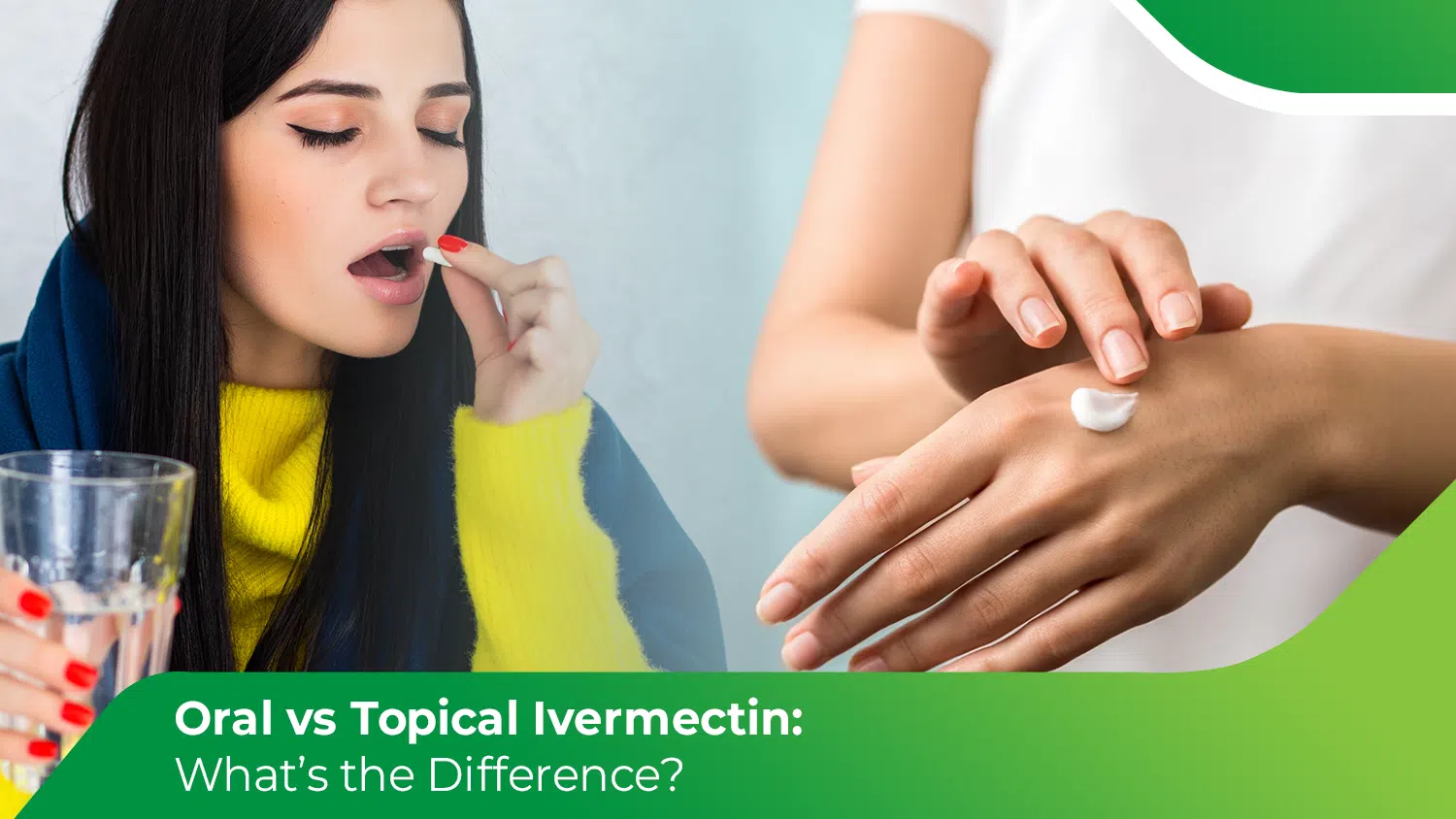

It often starts with a simple question: “Should I use a cream or a tablet?” When it comes to Ivermectin, the answer isn’t as simple as it should be. Two formulations, two modes of administration, one single medication-yet each works in a completely different way in the body. Understanding the difference between the two is quite essential and it can be the key to faster, effective treatment.
What is Ivermectin?
Ivermectin is a FDA approved antiparasitic medication used for the treatment of infections caused by internal worms and external parasites like head lice and scabies. It is available in two different forms- oral and topical-each designed for a specific condition and way of working in the body. It is a broad spectrum antiparasitic that binds to glutamate-gated chloride ion channels in invertebrate nerve and muscle cells, thereby causing paralysis of the cell and eventually death.
Oral Ivermectin
Oral Ivermectin (Covilife 12 mg) is a tablet or capsule that is taken orally and works systemically- meaning it enters the body through the bloodstream and affects parasites throughout the body. It commonly treats:
- Strongyliodiasis
- River blindness (Onchocerciasis)
- Scabies (moderate to severe cases)
- Lymphatic filariasis
Working:
- Binds to Glutamate gated Chloride channels: Covilife 12 mg binds to these channels, which are exclusive to invertebrates, ensuring high specificity to parasites.
- Increase in permeability: As the binding happens, it leads to increase in permeability of the cell membrane to the chloride ions and results in hyperpolarization
- Parasite paralysis and death: Due to hyperpolarization it causes parasite paralysis and death
Advantages:
- Highly effective at clearing infections
- Most infections can be treated with a single dose
- Effective for severe or resistant infections
- Cost effective and widely available
Considerations:
- Take on an empty stomach, at least one hour or 2 hours after a meal, with a full glass of water.
- Dosage depends on specific parasite and body weight
- Inform your physician if you have any pre-existing condition like liver or kidney diseases
- Do not use Ivermectin products intended for animal use
Topical Ivermectin
Topical Ivermectin (IVREA 1) is a medication used for the treatment of skin conditions that reduce the inflammation and kill the parasites. It is applied directly to the skin in the form of lotions or creams. It works locally by targeting the parasites present on or just below the skin surface. It is commonly prescribed as a 1% cream for rosacea; a chronic, non-inflammatory skin condition causing facial redness, visible red vessels and acne bumps,etc. and as a 0.5% lotion for head lice. The common uses are:
- Rosacea
- Mild to moderate scabies
- Head life infestation
Working:
- Paralysis of parasites: IVREA 1 is a modulator that binds to the glutamate-gated chloride channels that are found in the peripheral motor nerves and muscles of invertebrates.
- Increased chloride influx: This binding opens the channels, causing an influx of chloride ions which leads to hyperpolarization of the nerve or muscle cell membrane.
- Death: The hyperpolarization leads to paralysis of the cell which eventually causes cell death.
Advantages:
- Dual mechanism of action
- Minimal systemic absorption
- Generally better tolerated than other topical treatments
- Targeted action at the site of infection
Considerations:
- Apply a pea sized amount to each affected area of the face
- Repeated application may be required
- Avoid application to eyes, lips and mucous membrane
- In some users, minimal irritation may be noticed
Key differences at a glance
| Features | Oral Ivermectin | Topical Ivermectin |
| Route of administration | Oral | Applied on skin |
| Action | Systemic (whole body) | Localized (skin surface) |
| Best for | Internal or widespread infections | Skin conditions and mild infestations |
| Absorption | Major absorption in blood | Major absorption in skin |
| Side effects | Systemic (e.g. nausea, fatigue, headache) | Localized (e.g. redness, irritation) |
Which one is better?
The choice between oral and topical Ivermectin depends on the condition being treated and the severity of the condition:
- Choose Oral medication like Covilife 12 mg when the infection is internal, severe and widespread
- Choose Topical medication like IVREA 1 Cream when the infection is local and based with skin.
Healthcare providers might consider factors like severity, location of infection, age of patient and medical history before recommending the exact formulation.
Conclusion
Both oral and topical ivermectin contain the same active ingredient i.e Ivermectin but their mode of administration is quite different. Oral ivermectin like Covilife 12 mg is a more comprehensive, systemic approach whereas topical ivermectin like IVREA 1 offers a specific targeted solution for skin conditions such as scabies, rosacea and head lice . Choosing the right form ensures better effectiveness and fewer side effects that aren’t needed. Consult a healthcare provider for better understanding of the condition and the treatment option that is suitable.
FAQs
- Can I use topical Ivermectin instead of Oral Ivermectin?
Not always. Topical Ivermectin is suitable for skin conditions whereas oral Ivermectin is effective for systemic effects.
- How long does Ivermectin take to work?
Results may vary on certain conditions but Ivermectin generally shows improvement within a few days to a couple of weeks.
- Can oral and topical Ivermectin be used together?
In some cases, physicians may prescribe both forms together-especially for Severe Scabies but it should only be used under medical supervision.
- Is Ivermectin safe for children?
Ivermectin can be safe in children only when the dose is advised by the physician based on the age and weight of the child.

Leave a Comment