
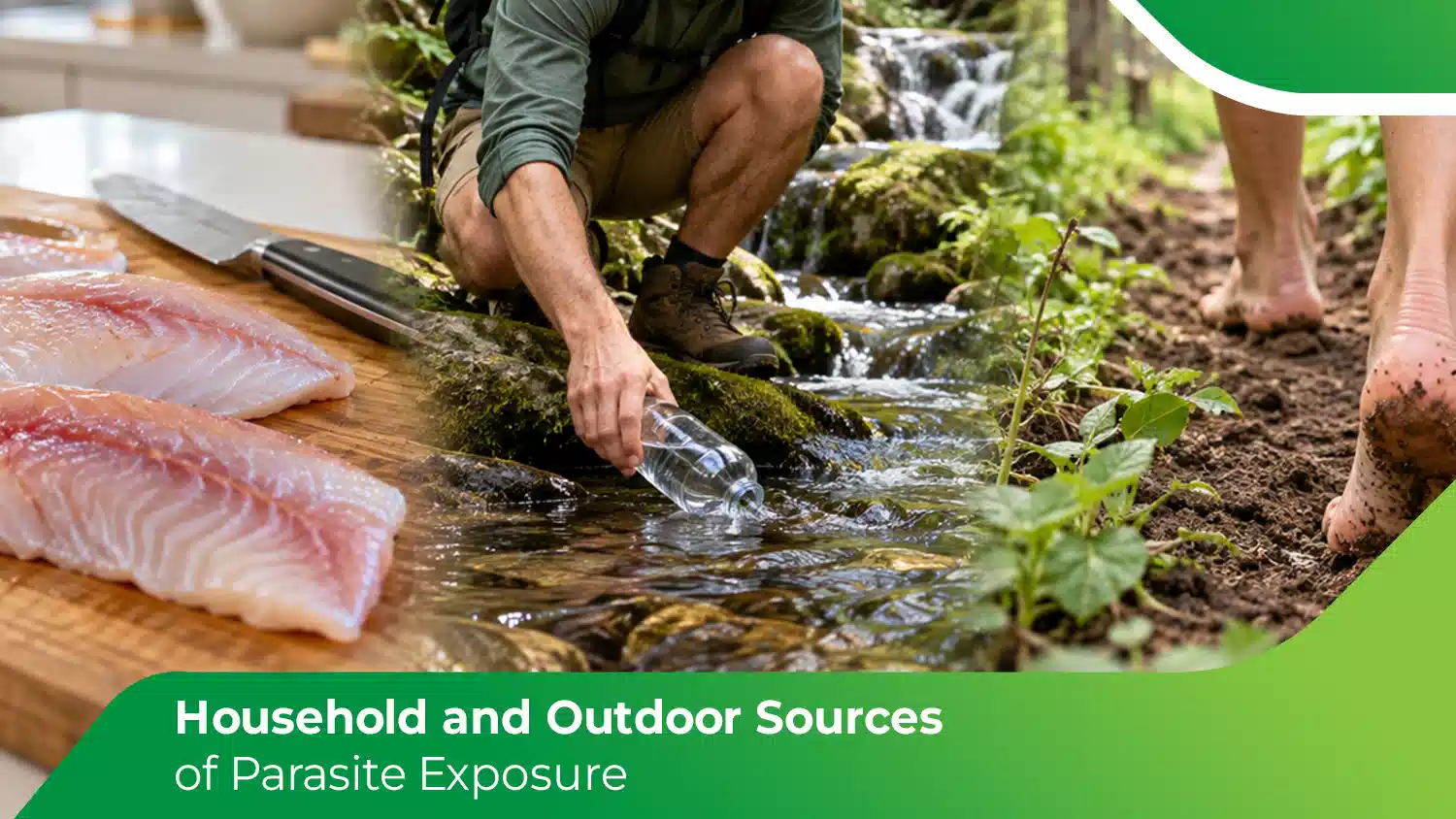

I used to think parasites were a “somewhere else” problem. Tropical trips, dodgy street food, that kind of thing. Then I started reading up on how ordinary the everyday stuff is, and honestly it changed how I look at my own back garden.
Not in a panicky way. Just a bit more awake.
So this is a rambly look at the main parasite sources you’d run into at home and outdoors. Some are obvious. Some really aren’t.
Okay, the kitchen first
Food is the big one. Raw or undercooked pork, beef, and fish. The stuff we all know we’re supposed to cook properly and sometimes don’t.
Tapeworm cysts can sit in meat. Certain fish can carry larvae too. Cooking through, or freezing fish properly, takes care of most of it. Sushi is mostly fine, before anyone yells at me.
Then salad. Leafy greens grown in soil that had animal waste anywhere near it can carry tiny eggs you’ll never see. Rinsing helps. Not perfectly, but it helps.
And the chopping board. Raw pork, then tomatoes, same board, quick wipe. I’ve done it; you’ve probably done it. This is how contaminated food and water end up in a completely normal week, no exotic holiday needed, just a rushed Tuesday dinner.
Water, which nobody thinks about
Tap water in the US and the UK is generally very safe. That’s the boring good news, and it really is good news.
Private wells are a different story. So are streams, ponds, and that gorgeous clear creek on a hiking trip. Giardia loves cold water that looks spotless. Looks clean. It isn’t always.
Campers know this. Everyone else forgets.
Swimming pools too, oddly. Cryptosporidium can survive normal chlorine levels, so a pool full of kids in August is not the sterile place you’d imagine. Paddling pools that sit for days aren’t great either, and I say that as someone who has left one out all week.
The garden bit I underestimated
Dirt just looks like dirt. That’s the whole problem.
Roundworm eggs can hang around in the ground for ages, and hookworm larvae can wriggle straight through the skin of bare feet. So contaminated soil isn’t only a “don’t eat it” thing. Sometimes it’s a “don’t walk through it in flip-flops” thing.
Kids make it worse, bless them. They dig, they lick their hands, they eat a bit more dirt, and they go back to digging. Sandpits are a classic, especially if the neighborhood cats treat them as a toilet. Keep a cover on it.
Gloves for gardening. Wash your hands after. Dull advice, but it’s the kind that actually works.
Those are the parasite sources people skip over because a garden feels wholesome. Fresh air, tomatoes, whatever. It is wholesome. It’s also soil.
And this is where how parasites enter the body gets a bit unsettling, because it’s not one route. Some get swallowed. Some go through the skin. Some come in on a bite.
Pets, sorry, the fluffy ones too
I love dogs. I’m not blaming dogs.
But puppies and kittens often carry roundworms, and fleas can pass on tapeworms if a pet swallows one while grooming. Then the pet licks a face and sleeps on the bed; you know how it goes.
Pets are one of the most overlooked parasite sources, weirdly, because we see them as family and not as anything to be careful around. Regular deworming from the vet matters more than most people think. So does picking up poop in the yard, since eggs in dog and cat waste end up back in the ground.
Which brings us back to the soil. Funny how that works.
It’s a loop, really. Pet, yard, kid, pet.
Bites, ticks and the skin stuff
Ticks are the ones people in the US worry about. Lyme is bacterial, not a parasite, but ticks can also carry Babesia, which is. Mosquitoes carry malaria too, though for most of us that’s a travel thing.
Scabies is different. Skin parasites like scabies mites spread through close contact and shared bedding, and people assume it’s a hygiene thing. It isn’t. Clean people get it. Really.
Head lice, same energy.
So where does it actually spread?
If I list the main parasite sources, it’s pretty repetitive. Unwashed hands, soil, water, undercooked food, animals, and close contact. That’s most of where parasites come from in ordinary life, anyway.
Places where parasites spread tend to be the everyday ones too. Daycares, playgrounds, shared bathrooms, the yard, and the kitchen counter. Nothing dramatic.
Common sources of parasite infections aren’t glamorous. I think that’s why we ignore them.
I keep going back and forth on how worried I am. Most of us are fine, honestly. But then some of these things can sit quietly for months, and that’s the part that nags at me. Both feel true, so I’m just leaving that there.
Also, ways parasites are transmitted aren’t always obvious, because a person can carry something with no symptoms at all, pass it on, and never know.
What it actually feels like (which is annoying, because it’s vague)
Parasitic infections don’t announce themselves. Stomach cramps, loose stools, bloating, being tired for no clear reason, some weight loss, and an itchy rash. Pinworm makes the bottom itch at night; it’s super common in kids, nothing to be embarrassed about.
Every one of those could be something else. Stress. A stomach bug. That questionable takeaway.
Intestinal parasites in particular can pass for a “sensitive stomach” for a long time. So if things drag on past a couple of weeks, or you’ve travelled somewhere, or your kid just won’t stop scratching, it’s worth asking about a stool test. A doctor, not Google. I know, I know.
Parasites in humans are more common than people assume, even in wealthy countries with clean water. Less common, sure. Not zero.
The medicine bit
People ask about ivermectin 12 mg a lot, so here’s my two cents. It’s a prescription antiparasitic. Doctors use it for specific things, like strongyloidiasis, river blindness, and sometimes scabies, depending on where you live and what your doctor prefers.
Dosing goes by body weight. Tablet strengths also differ from country to country, so what your doctor prescribes might not look like whatever you read online. That’s one reason it’s not a “grab it and guess” medicine.
It’s also not a cure for everything. It doesn’t deal with tapeworm, and giardia needs something else entirely. Different parasite, different drug. That’s why the stool test matters.
Please don’t use the horse or livestock versions. Wrong concentration, real harm. It happens more than it should.
Whether ivermectin 12 mg makes sense for someone depends on which parasite it actually is, their weight, other medication they take, and whether they’re pregnant or it’s for a small child. Those need a professional, full stop.
And treating an infection without sorting out the parasite sources at home means you might just get it again. That’s a very annoying loop to be stuck in.
Small stuff that actually helps
Household hygiene sounds dull. It’s also most of the fix.
Wash hands after gardening, after pets, after the bathroom, and before eating. Wash produce. Cook meat all the way through. Boil or filter water when you’re outdoors and it’s not from a tap. Keep shoes on in the yard. If someone in the house has scabies, wash bedding and towels hot and treat everyone who needs it, all at once.
Parasite exposure risk drops a lot with just those basics. Parasite transmission needs a route, and boring habits close the routes.
That’s really it. Nothing fancy.
Anyway
I don’t want you walking away thinking your home is a swamp. It isn’t. Most homes are fine, most days.
But once you know the parasite sources around a normal house and yard, you start noticing them. The cat in the sandpit. The unwashed lettuce. The bare feet in the garden.
I still forget half of this on busy days. Everyone does.
If something feels off for a while, get it checked. Cutting down parasite sources helps, and so does knowing when to ask a doctor.
FAQs
- Can you get parasites from your own garden?
Yes, mostly through soil, contaminated produce, or animal waste. Gloves and handwashing cut the risk a lot.
- Do pets always pass parasites to their owners?
No, not always. Regular deworming and picking up waste keep the chances low.
- Is ivermectin available without a prescription in the US or UK?
No, it needs a prescription from a doctor. Livestock versions aren’t safe for people.
- How do I know if it’s a parasite or just a stomach bug?
Hard to tell. If symptoms last more than a couple of weeks, ask about a stool test.
- Does washing vegetables get rid of parasite eggs?
It helps a lot but isn’t perfect. Rinse well, peel where you can, and cook when it makes sense.

Leave a Comment