
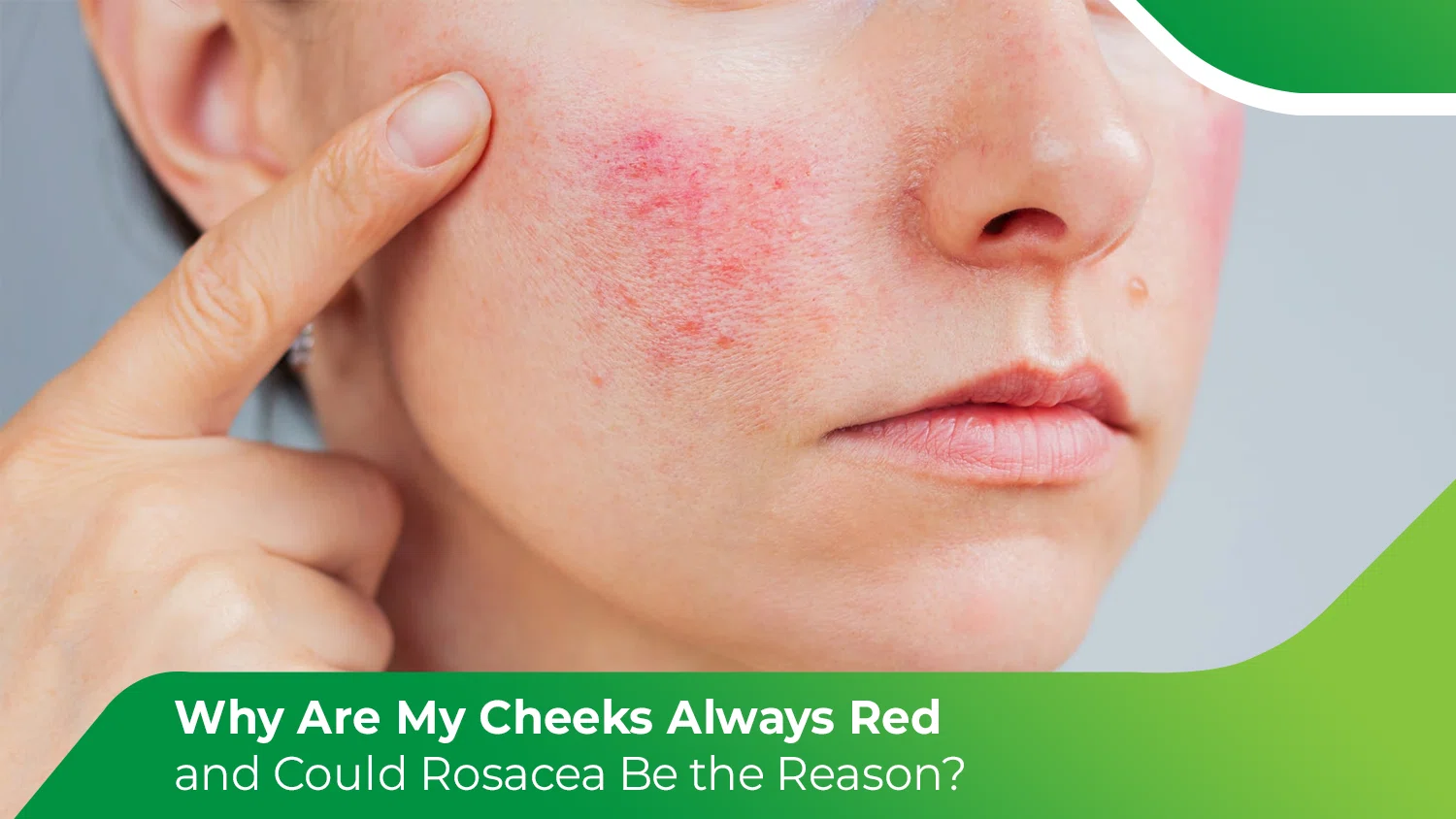

Okay, so this is one of those things people ask about a lot: someone says their cheeks look flushed pretty much all the time, and they can’t figure out why. Not from exercise. Not from being embarrassed. Just… red. And they’re wondering if that’s just how their skin is, or if it’s something with an actual name.
Short answer: it might be rosacea.
A Long answer depends, and also nobody can diagnose a face over a text message, sorry.
The flush that never fully goes away
Everyone gets red cheeks sometimes. Cold weather, a glass of wine, spicy food, and crying at a movie you swore wouldn’t get you. That’s normal. That fades in twenty minutes, an hour tops.
What’s different is when it sticks around. Or comes back constantly, in the same spots, sometimes with little bumps, sometimes with tiny visible blood vessels if you look closely in bad bathroom lighting.
That pattern recurring, centered on cheeks and nose and sometimes forehead, sometimes with texture changes, is basically the description people give when they’re circling the word rosacea without knowing it yet.

So what’s actually going on under there
Nobody fully agrees on why rosacea happens, honestly. There are theories about blood vessels that react too easily, an overactive immune response, a mite that lives on basically everyone’s skin but seems to cause more trouble for some people, genetics, and even gut stuff. It’s messy science, not a tidy one-line answer.
Age plays a part too, apparently. It tends to show up more in adults, thirties onward usually, though that’s not a hard rule; some people notice it younger. Skin tone matters for how obvious it looks too; on fairer skin, the pink is more visible, and on deeper skin tones, it can show up more as warmth or a duller kind of discoloration, which is part of why it gets missed or dismissed in some cases.
Family history seems to matter as well. If a parent dealt with the same thing, it’s not exactly rare for their kid to end up dealing with it too, though nobody can say for sure why that link exists, whether it’s genetics or shared environment or just coincidence stacking up across a family tree.
What doctors do agree on is that it’s not caused by “bad hygiene” or by drinking too much, even though there’s that old, unfair stereotype about red-nosed drinkers. That one’s just wrong, and honestly, it’s a bit embarrassing that it’s stuck around this long.
The stuff that sets it off
Triggers vary from person to person, which is annoying because there’s no single list to just follow.
Common ones, though, are sun, heat, spicy food, alcohol (red wine especially, for some reason), hot drinks, stress, harsh skincare products, and even intense workouts.
Someone’s cheeks might flare from a hot shower. Someone else’s from anxiety before a meeting. Both count.
Does it ever look like something else
Yes, and that’s part of why it gets missed or misdiagnosed for years sometimes. It can look like acne (bumps show up occasionally), like eczema, like just having “sensitive skin,” like sunburn that never fully calms down.
A dermatologist can usually tell fairly quickly just by looking, sometimes without needing tests at all, though other times they’ll rule a few other things out first.
What people actually do about it
There’s no cure, which is the annoying part nobody likes hearing. But it’s manageable, mostly.
Gentle skincare, fragrance-free, no harsh scrubbing, and sunscreen are basically non-negotiable. That’s boring advice everyone gives, and it’s still true anyway.
For flare-ups that are more stubborn, doctors sometimes bring topical treatments into the mix, and in some cases an oral option too. Delactin 12 mg is one of the names that comes up in those conversations, sometimes not a magic fix, just one of several options a doctor might discuss depending on how someone’s skin is behaving and what’s been tried already.
It’s not something to just pick up because a blog mentioned it, though. Whatever gets recommended really depends on what a dermatologist actually sees on your face and which triggers keep hitting you specifically.
There’s also laser treatment for people whose visible vessels bother them more than the general flushing does. It’s not cheap, and it’s not one-and-done usually, but some people swear by it. Others try it once and don’t bother again. Depends on the person, depends on the budget too, honestly.
Some people end up just tracking their own triggers in a notes app for a few months: what they ate, what the weather was, and how stressed they were, and slowly build their own little map of what sets their face off. Sounds tedious. Kind of is. But it works better than guessing forever.
The part where nobody talks about how it feels
There’s a whole side of this that’s less medical and more just… annoying, socially. People assume you’re sunburnt. Or drunk. Or overheated. Or embarrassed about something specific, when actually your face just does this on its own regardless of mood.
Some people get self-conscious about it in photos, in video calls especially, and that close-up unflattering lighting thing. Makeup helps some, and green-tinted primer gets recommended a lot for canceling out the pink, though it’s not a fix, just a cover.
It’s not life-threatening or anything dramatic like that. But it’s the kind of thing that quietly affects confidence over years if it’s not addressed at all, and that part matters even if it doesn’t show up in a medical textbook.
When it’s more than “just red cheeks”
If the facial redness is persistent, or paired with visible vessels or bumps or eye irritation (it can mess with eyes too, which surprises people), it’s worth an actual appointment instead of guessing at it for another year.
Waiting it out doesn’t tend to help much. It can get more noticeable over time if left alone completely, though that’s not true for everyone; some people plateau and stay pretty stable.
A few things that actually helped people, from what I’ve read
Cold compresses during a bad flare sound too simple to work, but a lot of people mention they calm things down within minutes.
Switching to lukewarm showers instead of hot ones. Small thing, but heat is such a common trigger that this alone makes a noticeable difference for some.
Cutting back on cinnamon and certain spices specifically, not just “spicy food” broadly. Apparently, cinnamaldehyde is one of the more common individual culprits, though that’s very person-specific and not everyone reacts to it.
A consistent, boring skincare routine over a fancy one. Less product, fewer active ingredients stacked together, more patience. That seems to come up again and again in what people share about managing this long-term.
None of this replaces an actual diagnosis or a dermatologist’s input, to be clear. These are just the small, unglamorous things that keep coming up when people talk about living with it day to day, not a treatment plan on their own.
Okay, but is it me, though
If you’re reading this because your cheeks are always a little pink and you’ve started wondering that alone is worth mentioning to a doctor next time you’re in for something else anyway. Doesn’t need to be its own dramatic appointment.
Sometimes it’s rosacea. Sometimes it’s just how your skin runs warm. Both are fine outcomes, honestly; one just needs a little more management than the other.
Anyway. If your face runs red more than it doesn’t, that’s the part worth paying attention to not the redness itself necessarily, just the “more than it doesn’t.”
I keep coming back to that phrase because honestly it’s the whole thing in a nutshell. Occasional pink cheeks are just a face doing normal face things. A face that’s pink most days, that flares on a schedule you can almost predict, that’s a different situation and probably deserves ten minutes with someone who actually looks at skin for a living.
No huge rush, to be fair. This isn’t the kind of thing where waiting a few extra months changes the outcome dramatically. But it also doesn’t get better on its own most of the time, so at some point “later” needs to turn into an actual appointment on the calendar rather than a thought that keeps getting pushed back when dealing with health concerns.
FAQs
- Is rosacea the same as acne?
No, though they can look similar. Rosacea causes redness and sometimes bumps but works differently under the skin.
- Can rosacea go away on its own?
Not usually; it’s generally something you manage rather than cure.
- Does diet affect flare-ups?
For a lot of people, yes. Spicy food and alcohol are common ones.
- What does it look like early on?
Often just mild flushing that comes and goes before it settles into something more constant.
- Is Delactin 12 mg specifically for this?
It’s sometimes part of a treatment conversation, but only under a doctor’s guidance, not something to self-start on your own.

Leave a Comment