
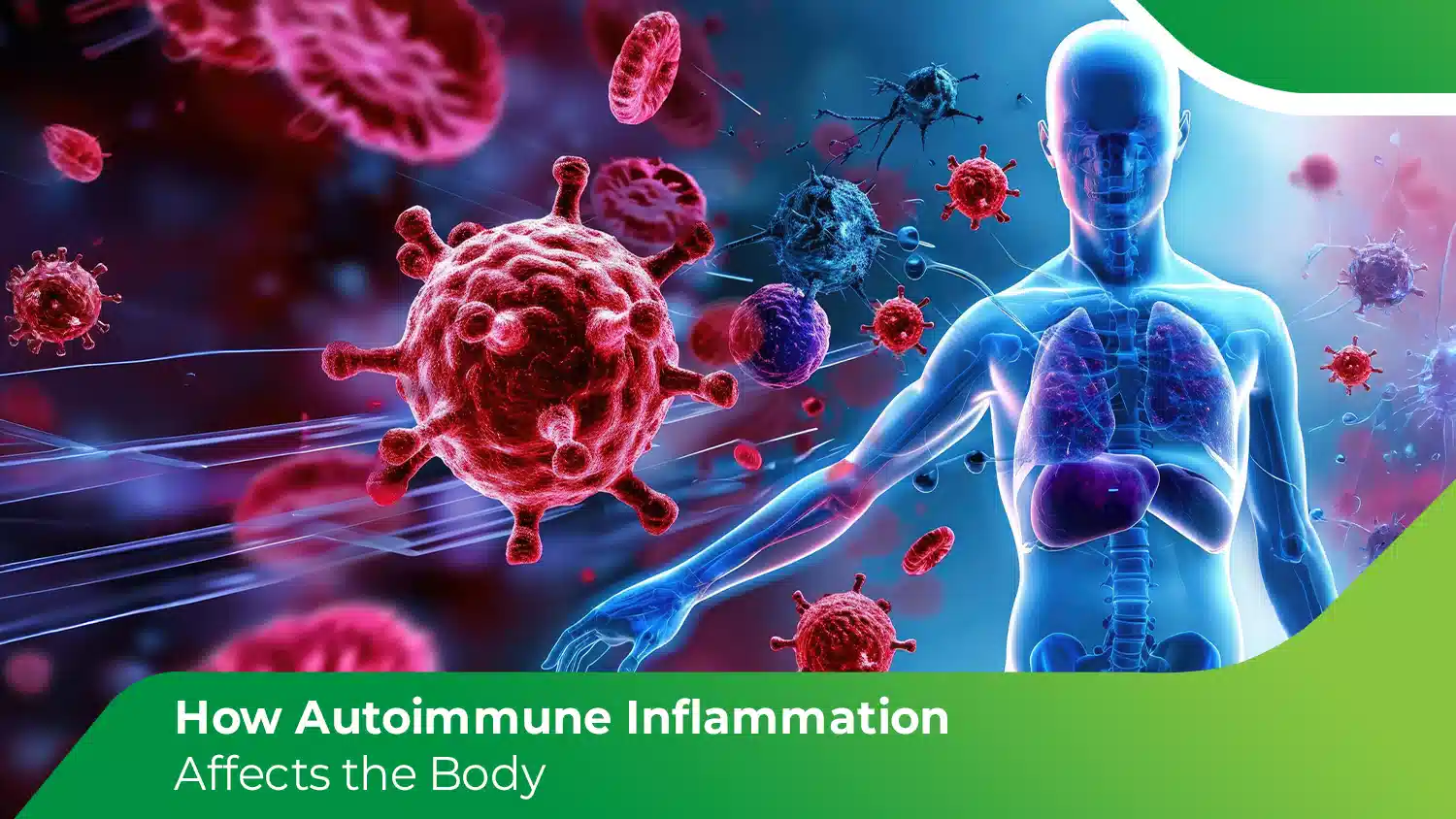

Your body has a security team. Most days it works quietly in the background. You get a cold, a scrape, a dodgy tooth, and the team deals with it before you’ve even noticed.
Now picture that same team getting confused and swinging at the wrong people.
That’s basically autoimmune inflammation, and the first time I properly read about it, I had to go back and read the paragraph again. Because it sounds made up. It isn’t.
Okay but why would a body do that to itself?
Nobody has a perfectly clean answer for why the immune system attacks healthy cells. Researchers have ideas, lots of them. Genes matter. Infections seem to set things off in some people. Hormones probably play a part too, since women get diagnosed way more often than men.
Smoking, stress, certain chemicals, low vitamin D… people argue about every one of these.
So when doctors talk about the causes of autoimmune inflammation, what they usually mean is a mix. A bit of genetics, a trigger or two, and some bad luck. Bad luck isn’t a medical term, I know. But a lot of patients say it anyway.
And sometimes there’s no obvious trigger at all. That part frustrates people the most, I think.
Inflammation is fine. Until it isn’t.
Quick detour, because inflammation gets a bad reputation it doesn’t totally deserve.
Roll your ankle and it swells, goes warm, and turns a bit red. Annoying, but that’s your body sending help. That’s the normal inflammatory response doing its job. Loud, fast, and over in days.
The problem is when the alarm doesn’t switch off. Weeks. Months. Years. That’s chronic inflammation, and it’s slow and sneaky and wears tissue down while you’re busy getting on with your life.
Here’s roughly how autoimmune diseases cause inflammation. Immune cells decide some normal tissue is a threat. They release chemical signals and call in backup, and the backup starts damaging that tissue. Damaged tissue sends out more distress signals. More backup arrives. You can see where this goes.
It loops. That loop is what makes autoimmune inflammation so stubborn, and why it doesn’t just clear up after a few days of rest like a sprain would.
(Okay, rest does help some people. Just not in the way a sprain heals. Anyway.)
Joints get hit first for a lot of people
Rheumatoid arthritis is the one most people have heard of. With rheumatoid arthritis inflammation targets the lining of the joints. Small joints first, usually. Fingers, wrists, toes. Often both sides at once, which is a clue doctors look for.
You get joint swelling that feels puffy and warm. You get joint pain and stiffness that’s worst in the morning, sometimes lasting an hour or more. People describe it as feeling like their hands belong to someone much older.
And then the tiredness. Not normally tired. The kind where a full night’s sleep doesn’t touch it.
Left alone, autoimmune inflammation in the joints can wear away cartilage and even bone. Which is why early diagnosis is such a big deal. If I had to pick the most repeated sentence in any rheumatology clinic, it’d be that one.
Lupus is its own animal
Lupus inflammation doesn’t stick to one place, and that’s what makes it so hard to pin down. It can touch skin, joints, kidneys, heart, lungs, and even the brain. Some people get the butterfly rash across the cheeks and nose. Some never do.
Flares come and go. Sunlight sets them off for plenty of people. So can stress, or an infection, or nothing you can identify.
Kidney involvement is the one doctors watch most closely, because it can be quiet for a long time. You can feel mostly fine and still have trouble breathing. Which is a bit unsettling, honestly.
It’s not just joints and skin
If you only remember one thing, maybe make it this. How autoimmune conditions affect the body depends on which tissue is being targeted. Thyroid in Hashimoto’s. Insulin-making cells in type 1 diabetes. Gut lining in Crohn’s or celiac. Nerve coverings in multiple sclerosis. Skin in psoriasis.
Different targets, same basic story. Autoimmune inflammation aimed at the wrong tissue.
Inflammation caused by autoimmune disorders also doesn’t always stay in one organ. It can spread, or a second condition can show up later. Having one makes a second a bit more likely, which nobody mentions at the start.
And the everyday stuff gets missed. Brain fog. Low fevers. Hair thinning. Feeling off for months and being told it’s stress. That’s a really common story, and I think a lot of it comes from how quietly immune system dysfunction can begin. Small things first. Then not so small.
There’s a whole family of inflammatory diseases out there and they overlap in confusing ways, so diagnosis can take years. Years. Some people see four or five doctors before anyone says the word autoimmune.
So how do doctors even figure it out
Mostly it’s a puzzle. Blood tests help, like ANA, rheumatoid factor, CRP and ESR, which is the alphabet soup you’ll probably see on your results. None of them is perfect on its own. You can have a positive test and no disease, or the other way round.
So doctors lean on symptoms, exam findings, sometimes scans, and a lot of pattern recognition.
It’s not tidy. I wish it were.
Where medicine comes in
Treatment depends entirely on the condition, and it’s a doctor’s call. But one drug comes up constantly for lupus and rheumatoid arthritis, and that’s hydroxychloroquine. You might see it sold as HCQS 400 MG in some markets, and it’s used to quiet autoimmune inflammation over the long run, not to knock it out overnight.
Funny history, too. It started as a malaria drug. Doctors noticed it calmed immune activity in people with certain conditions, and it just stayed.
It isn’t a painkiller. That’s the thing people get wrong. It works slowly, sometimes weeks or even a few months before you notice anything, and the goal is fewer flares over time rather than instant relief. It’s also not a steroid, and it’s generally seen as gentler than the heavier immune-suppressing options. Gentler, not harmless, though.
The big one is eye health. Long-term use carries a small risk of retinal damage, so doctors usually want a baseline eye exam and regular screening afterwards. Stomach upset is common early on, and taking it with food often helps. Dose usually depends on body weight, and that’s something your doctor works out, not something to guess at.
Also, don’t stop it because you feel better. Feeling better might be the medicine working. If someone’s doctor has prescribed HCQS 400 MG, the conversation about changing or stopping it should happen in the clinic, not at home after one good week.
The boring but real stuff
Medicine is one piece. Sleep matters more than people want to admit. Gentle movement helps stiff joints, even when it’s the last thing you feel like doing. Sun protection if you’ve got lupus. Write down symptoms before appointments, because you will forget half of them once you’re in the room.
And find a rheumatologist, or whichever specialist fits, instead of relying on general advice. Specialists catch patterns.
I keep coming back to this, but sooner really is better. Autoimmune inflammation is easier to calm early than to reverse later. Not always. But often enough, it’s worth saying twice.
FAQs
- Can autoimmune conditions be cured?
Not usually, but many can be controlled well with the right treatment.
- Does stress make symptoms worse?
For a lot of people, yes. Stress is a common flare trigger.
- Is hydroxychloroquine a steroid?
No. It works differently and isn’t a steroid.
- When should I see a doctor?
If you have ongoing fatigue, swollen joints or unexplained rashes lasting more than a few weeks.
- Does diet matter?
It can help how you feel, but it doesn’t replace medical treatment.

Leave a Comment