

Someone gets a scratchy throat, or a cut that starts looking angry and red, and the first thought is usually “great, is this a bacterial infection or am I just being dramatic.” Fair question honestly. The body doesn’t really send a memo saying “hey, bacteria just got in, here’s the play by play.” It just… reacts. And most of us only notice the reaction, not the actual war happening underneath.
Let’s just walk through it, messily, the way it actually happens rather than the neat diagram version.
How do bacteria get in?
Skin is doing a decent job most of the time, it’s basically a wall. But walls have doors – cuts, scrapes, a dental procedure, even something as small as a hangnail. Or bacteria come in through breathing, through food, sometimes through a catheter or IV line in hospital settings. Once they’re past the first barrier, they’re not shy about it. They start multiplying. Fast. Some bacteria double every 20 minutes under the right conditions, which sounds almost impressive if it wasn’t so inconvenient for us.
And this is where it gets interesting because the body doesn’t wait to “figure out” what’s happening. It reacts almost instantly, before a person even feels sick.
The immune system doesn’t ask questions first
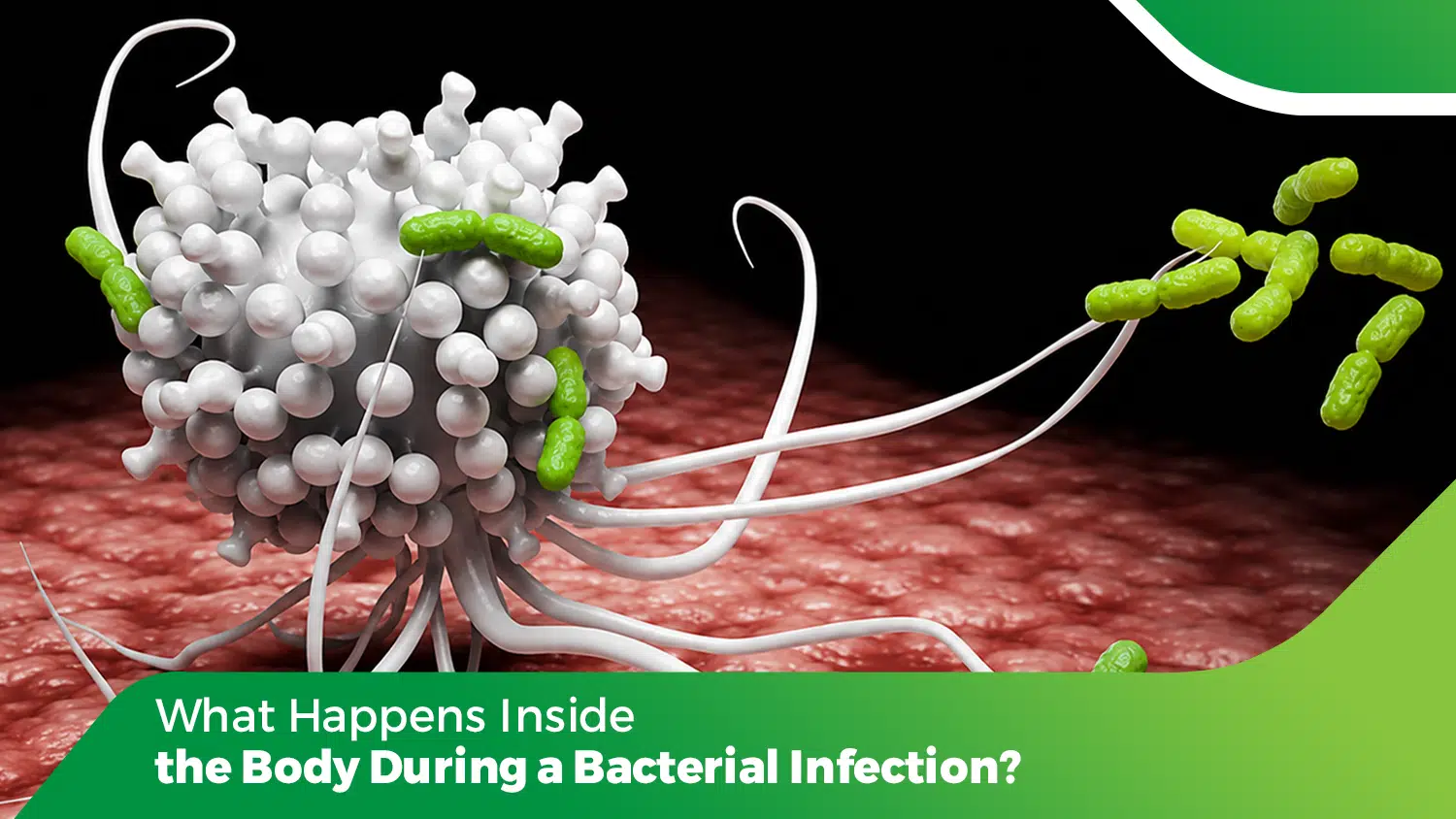
Many people have a misconception that the immune system carefully identifies the enemy, strategizes, then attacks. Not really, at least not initially. The first responders – white blood cells (WBCs) like neutrophils just show up and start engulfing anything that looks foreign. It’s less “specialist team” and more “everyone grab a weapon and go.” This is the innate immune response, and it’s blunt.
This is basically how the immune system fights bacteria in the opening minutes to hours – inflammation, swelling, redness, sometimes pus (it’s actually just dead white blood cells and bacteria mixed together, so weirdly it’s a sign the body is winning something).
Then later, over a few days, the adaptive immune system kicks in – this is the part that actually “learns” the specific bacteria and builds antibodies against it. That’s why the first day or two of an infection often feels worse than day four or five, even without medication. The body is upgrading its defense mid-fight.
Inflammation and infection response-why does everything swell up?
People hate inflammation, like it’s the villain, but honestly it’s just blood vessels widening so more immune cells can rush to the area. Redness, heat, swelling, pain – that’s inflammation and infection response working exactly as designed. It’s uncomfortable, sure, but it’s not random damage, it’s traffic control for immune cells.
Sometimes though inflammation overshoots. Like way overshoots. And that’s when things like fever spike higher than needed, or swelling gets so bad it presses on nerves and causes more pain than the infection itself would. The body isn’t perfect at calibrating this, which – fair, nobody is.
Signs and symptoms of bacterial infection
This is the part everyone actually cares about honestly. What are you even supposed to look for?
Common signs and symptoms of bacterial infection include localized redness, swelling, warmth, pain, and often pus or discharge if there’s a wound involved. Fever is common too, but so is fatigue – that dragging, can’t-get-out-of-bed feeling, which is actually cytokines (immune signaling chemicals) doing their thing, not just “being tired.”
The thing is though, these symptoms overlap a lot with viral infections. Which brings up the next confusing bit.
Bacterial infection vs viral infection
A sore throat could be strep (bacterial) or just a cold virus. A cough could be bronchitis from either. The bacterial infection vs viral infection debate isn’t something you can eyeball reliably.
A few loose patterns though – bacterial infections tend to stay localized more (one spot gets really bad, like a boil or a specific painful area), while viral infections tend to hit more broadly, body aches everywhere, runny nose, that kind of spread-out misery. Also and this isn’t a hard rule, bacterial infections sometimes get worse after day 5-7 instead of better, whereas viral stuff usually peaks around day 3-4 then fades. Physicians often use blood tests, like checking white blood cell counts or CRP levels, to actually confirm which one it is rather than guessing.
The stages, if you want to call them that
Nobody really talks about the stages of a bacterial infection like a checklist because it’s not that clean in real life, but roughly:
First there’s exposure – bacteria enters. Then colonization, where they start setting up shop and multiplying somewhere on or in the body. Then invasion, where they push past local defenses into deeper tissue or bloodstream (this is when things get more serious, sepsis territory in bad cases). Then the immune response ramps up, symptoms show, and either the body clears it, or medical treatment steps in to help finish the job, or – worst case – it spreads further.
It’s not always linear either. Sometimes bacteria sit dormant for a while (like some UTIs or even TB) before flaring up.
Treatment options
Physicians prescribe things based on what bacteria is suspected or confirmed via culture. For something like a bacterial throat or skin infection, a physician might prescribe an amoxicillin-based antibiotic – Cipmox 500 mg is one such option, and it works by stopping the bacteria from building their cell walls properly, which basically kills them off or stops them multiplying. It’s not something to just self-start though, it needs a prescription and needs the right diagnosis first, because if it’s viral, antibiotics do nothing except mess with gut bacteria for no reason.
There isn’t really one universal answer for bacterial infection treatment options. It depends entirely on where the infection is, how bad, and what bacteria strain. Mild skin infections might just need topical treatment. Something like Cipmox 500 mg gets used fairly often for respiratory or skin-related bacterial infections because amoxicillin has a broad enough spectrum to hit common culprits. But for resistant strains or more serious infections, physicians might switch to something stronger, sometimes even IV antibiotics in hospital.
And completing the full course matters – stopping early because symptoms improved is basically how antibiotic resistance builds up over time, bacteria that survive the incomplete dose get tougher.
Why some infections just… win, sometimes
Not to be dramatic but sometimes the body loses this fight, or at least struggles a lot longer than expected. Age, existing health conditions, a weakened immune system (diabetes, cancer treatment, etc.) all change how well the body can mount a proper response. Elderly patients sometimes don’t even spike a fever with a serious infection because their immune response is blunted – which is honestly kind of scary if you don’t know to look for other signs like confusion or low blood pressure instead.
Also worth mentioning not all bacteria are the enemy. Most bacteria in the body, especially in the gut, are helpful, doing digestion-related work and even helping regulate immune function. It’s really only when the “bad” ones get somewhere they shouldn’t be, or multiply out of control, that it becomes a problem.
Conclusion
There’s no single dramatic moment where “the infection happens.” It’s more this ongoing back and forth – bacteria multiplying, immune system throwing everything it’s got, inflammation doing its messy job, and eventually either the body wins on its own or gets help from something like Cipmox 500 mg or another antibiotic to tip the scale. Understanding the stages of a bacterial infection and knowing the difference between bacterial infection vs viral infection symptoms can genuinely help someone decide when it’s a “wait it out” situation versus a “go see a physician” one. Though honestly, when in doubt, just get it checked. Self-diagnosing bacterial infection from a symptom checklist online rarely goes perfectly.
FAQs
- How long does a bacterial infection usually last?
It usually depends on the type of infection, but many clear up in 1-2 weeks with proper treatment.
- Can a bacterial infection go away without antibiotics?
Mild ones sometimes do, if the immune system handles it. Serious ones usually need treatment.
- Is fever always a sign of bacterial infection?
No, fever happens with viral infections too. It’s not a reliable way to tell them apart alone.
- Why do physicians sometimes do a blood test before prescribing antibiotics?
Physicians prefer blood tests to confirm it’s actually bacterial and not viral, since antibiotics don’t work on viruses.
- Can bacterial infections spread to other parts of the body?
Yes if left untreated it can spread to different parts of the body especially the bloodstream.
Leave a Comment